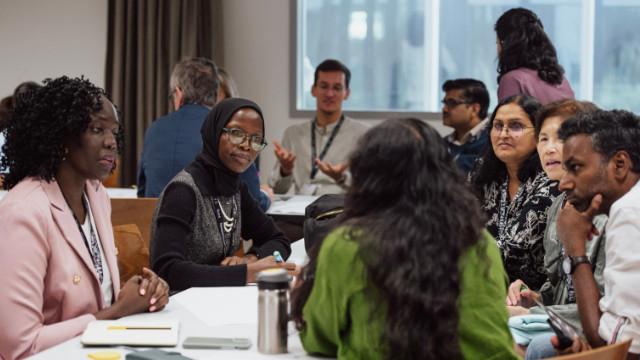
A multilateral workshop format explored how climate change affects human, animal and environmental health – across disciplinary and geographic boundaries.
On 15 September, the European Space Agency launched a satellite mission to measure and map the photosynthetic activity of plants on Earth. The University of Zurich is involved in the project.
Buried Underwear Shows Land Use Is Key to Soil Health
A citizen science project involving 1,000 volunteers and more than 2,000 pairs of buried cotton underwear shows that land use is the most important factor in determining decomposition rates and soil life.
Amazon’s Biocultural Heritage Under Greater Threat Than Expected
Indigenous cultures in the Amazon region will lose up to one-third of the native plant species due to climate change while biocultural knowledge is set to decline sharply by 2080.
At the 4th World Biodiversity Forum in Davos, biodiversity researchers are joining participants from politics, business, society, and culture to discuss ways to protect biodiversity.
The HiBiDiS mission aims to provide new insights into forest biodiversity, answering key questions about climate change. UZH is participating as a scientific partner.