Zero Tolerance Toward Sexual Harassment
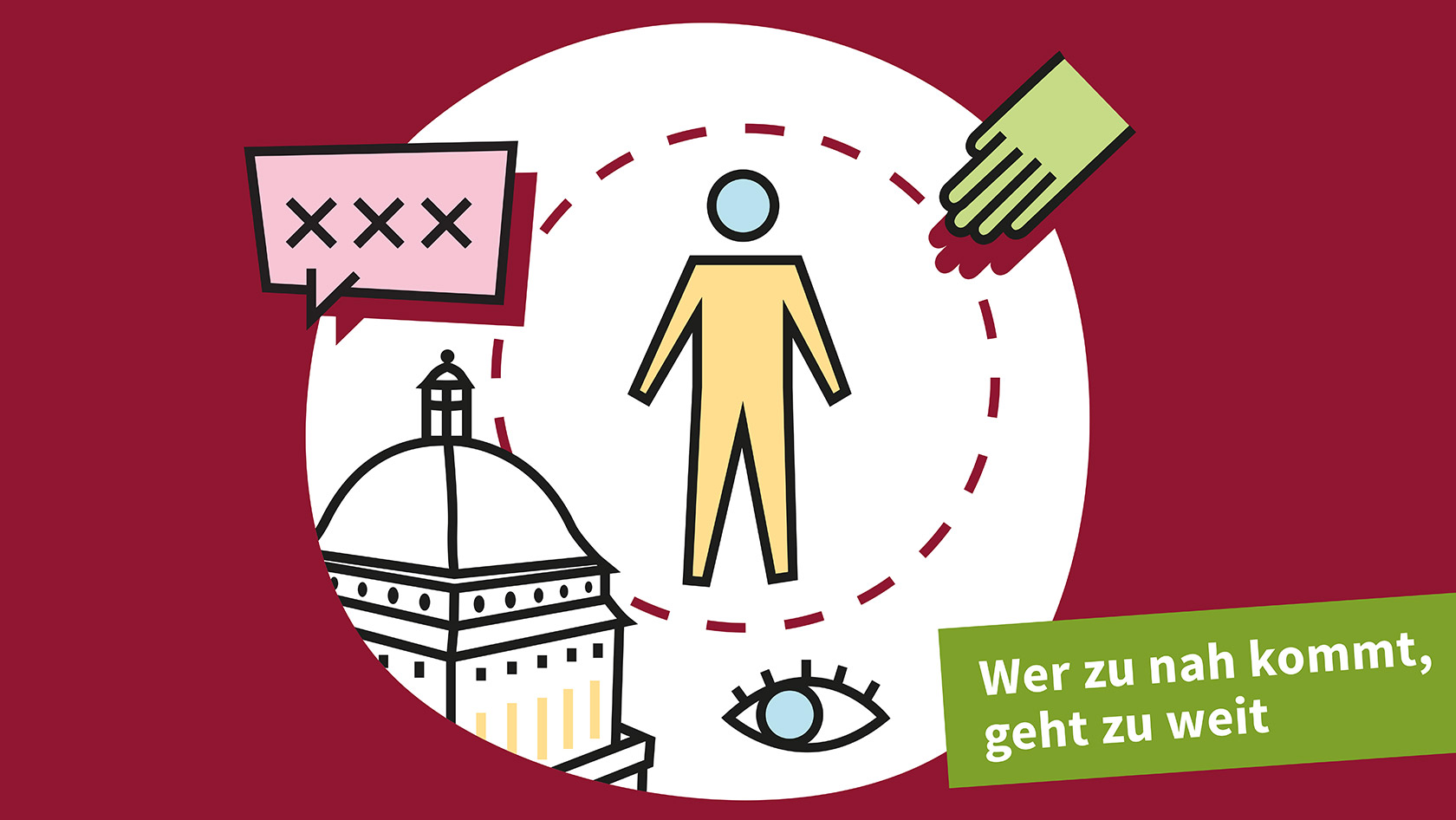
On 21 April, Swiss universities are holding a Sexual Harassment Awareness Day. Is it more important than ever to mark such a day nationwide?
Gabriele Siegert: Special days like this are certainly useful to generally raise awareness of the relevant topic. In that sense, a Sexual Harassment Awareness Day is important, as it allows us to draw attention to the topic with activities and events. But we can’t limit our focus and our measures to just one such day – it’s not as if the problem goes away when the day ends.
Between students, teaching staff and researchers, which group of people are especially affected by sexual harassment? Do structural factors play a part?
Siegert: Based on the 2025 annual report of the committee on the protection against sexual harassment (RSB Committee), the number of people affected is highest among students, with 14 people. This isn’t surprising, though, as the students also make up the largest group at UZH. When calculated as a percentage, the share in each of the groups is well below 1% of the UZH community. What’s certain is that every case is one too many. I also assume that female UZH members are far more likely to be affected than male members. Sexual harassment is often linked to hierarchical power imbalance. In this respect, structural factors can certainly play a role.
Where does sexual harassment begin? Why is it also important to take seemingly “small” transgressions seriously?
Siegert: What constitutes sexual harassment is defined in paragraph 4 of the relevant regulations, where it says that sexual harassment is any offensive conduct of a sexual nature that the person at whom it is directed finds uncomfortable. In the case of specific actions – meaning assault or inappropriate physical contact – it’s generally evident to us straight away. In other situations, it’s often not so easy to tell where sexual harassment begins. Here role reversal may be a helpful tool for self-appraisal: would you want someone to say that to you? Or to give you that kind of feedback? How would you feel if someone made jokes like that about you?
Even though the situation isn’t always straightforward, it’s important that we address this type of infringement too. It’s part of the zero-tolerance stance that UZH takes against sexual harassment. It’s about understanding that others might interpret our words or actions differently than we intended. Particular caution is advised in hierarchical relationships. The person of lower status often cannot set their boundaries, as objecting or fighting back in any hierarchical situation always entails a certain amount of risk. In all of this, it’s important to remember that criticism and critical thinking are at the heart of the university. As such, we have to be critical, and we have to be capable of providing and receiving critical feedback – and this always has to be about the task or performance, never about someone’s gender or physical features.
What support and advice services are available to people who have experienced sexual harassment at UZH?
Siegert: In this regard, I’d like to direct UZH staff and students to a specific website. It includes a list of contacts people can turn to. There are also other pages that provide details of additional advice centers. However, we’ve noticed that given the many potential contact points, people are often unsure where they should turn to and who exactly will be investigating the matter and providing advice. For us as a university, it’s important that any student or staff member affected by harassment or assault can get support quickly and easily. That’s why we have launched a large-scale project aimed at developing UZH’s advice and support services, improving co-ordination between the different offices, and optimizing existing processes.

For us as a university, it’s important that any student or staff member affected by harassment or assault can get support quickly and easily.
As part of the project, we’re also creating an external, anonymous report service, which will also accept anonymous reports and will run as a pilot for the next two years. This complements the existing internal channels and will enable all UZH members to report any incident they have personally experienced or observed. The service will work with those concerned to clarify what has happened and outline possible next steps. This information is only passed back to UZH if the reporting person agrees to it. We’re aiming to launch this service during the second half of 2026.
What measures is the university itself taking to prevent sexual harassment and to promote a respectful and safe environment in which to work and study?
Siegert: Overall, it’s about informing all groups within the UZH community – especially also new staff and students – and raising awareness of the issue. We do this with fliers, fact sheets and posters, and also by providing information events, talks, panel discussions, training and workshops to protect against sexual harassment at the University of Zurich.
Here I’d like to, more generally, point to the UZH CommUNIty website. That’s where we clearly state that as members of the University of Zurich we participate in campus life with respect and openness and are guided by our code of conduct: together, we champion tolerance, diversity, inclusion, equal opportunities and equality. We do not tolerate discrimination or harassment. And we support each other in preventing inappropriate behavior. The fact that reported cases are followed up – through exploration of the facts or an internal investigation – also helps to ensure a safe environment for work and study. Depending on the case and the affected person’s consent, there may also be an external investigation.