Equality by Design
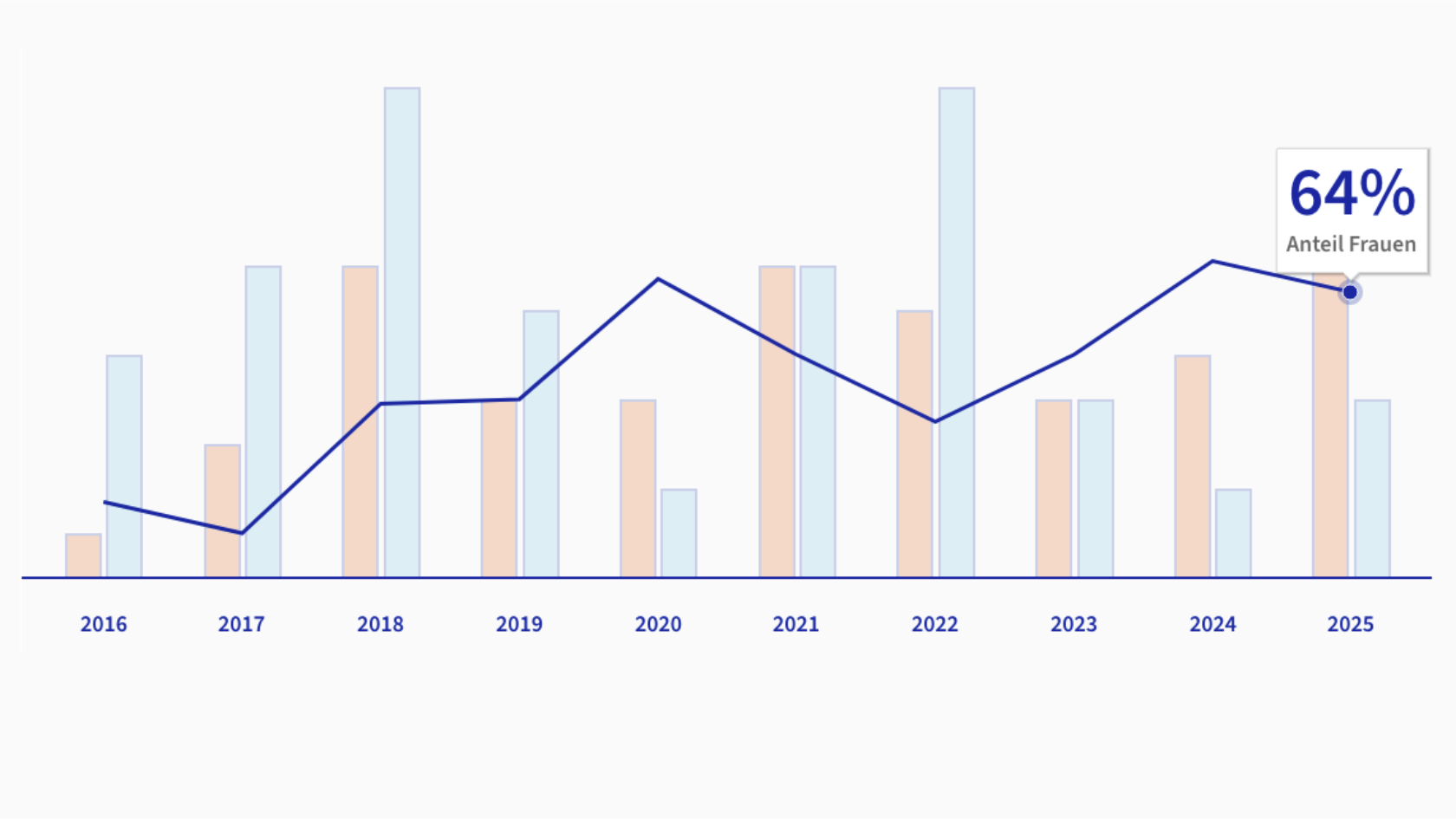
In 2014, women made up just 16 percent of professors at the University of Zurich’s Faculty of Science (MNF). The faculty responded by systematically collecting and analyzing data on gender representation and developing targeted measures. Their impact has been reviewed twice a year ever since.
“From the postdoctoral level onward, the share of women dropped dramatically across all MNF departments before our gender equality measures were introduced,” says Ines Kohler, Managing Director of the MNF Dean’s Office. Twelve years later, and with the help of the Recruiting for Excellence project, the proportion of women professors stands at 34 percent – more than double what it was then. Given how long professorial appointments take, that is a notable shift.
The Faculty of Science is now applying for the international Athena Swan label. It is the first faculty in Switzerland to do so, and the move is being watched with interest well beyond UZH. Since Switzerland does not officially participate in the program, the Faculty of Science cannot receive a regular Athena Swan award, but it may be granted an equivalent distinction instead.
Athena Swan explained
Athena Swan is an international award scheme for universities and research institutions committed to equality, diversity and inclusion. It recognizes institutions and organizational units that take a long-term, data-driven approach.
The Athena Swan Award was launched in the UK in 2005 and is granted at Bronze, Silver and Gold level. The name combines Athena, the Greek goddess of wisdom, with SWAN, the acronym for Scientific Women’s Academic Network.
At UZH, the Faculty of Science is taking part in Athena Swan as part of EDIxUZH. This university-wide initiative forms part of the federal program P7: Equal Opportunities – Promoting Equality, Diversity, and Inclusion at All Levels of Higher Education Institutions. The award is valid for five years and must then be renewed.
The application process is being coordinated by Claire Blackman, a data specialist, and Sara Petchey, head of the Faculty of Science’s internal EDI commission. They are supported by Karin Gilland Lutz, head of UZH’s central EDI office.
Looking inward
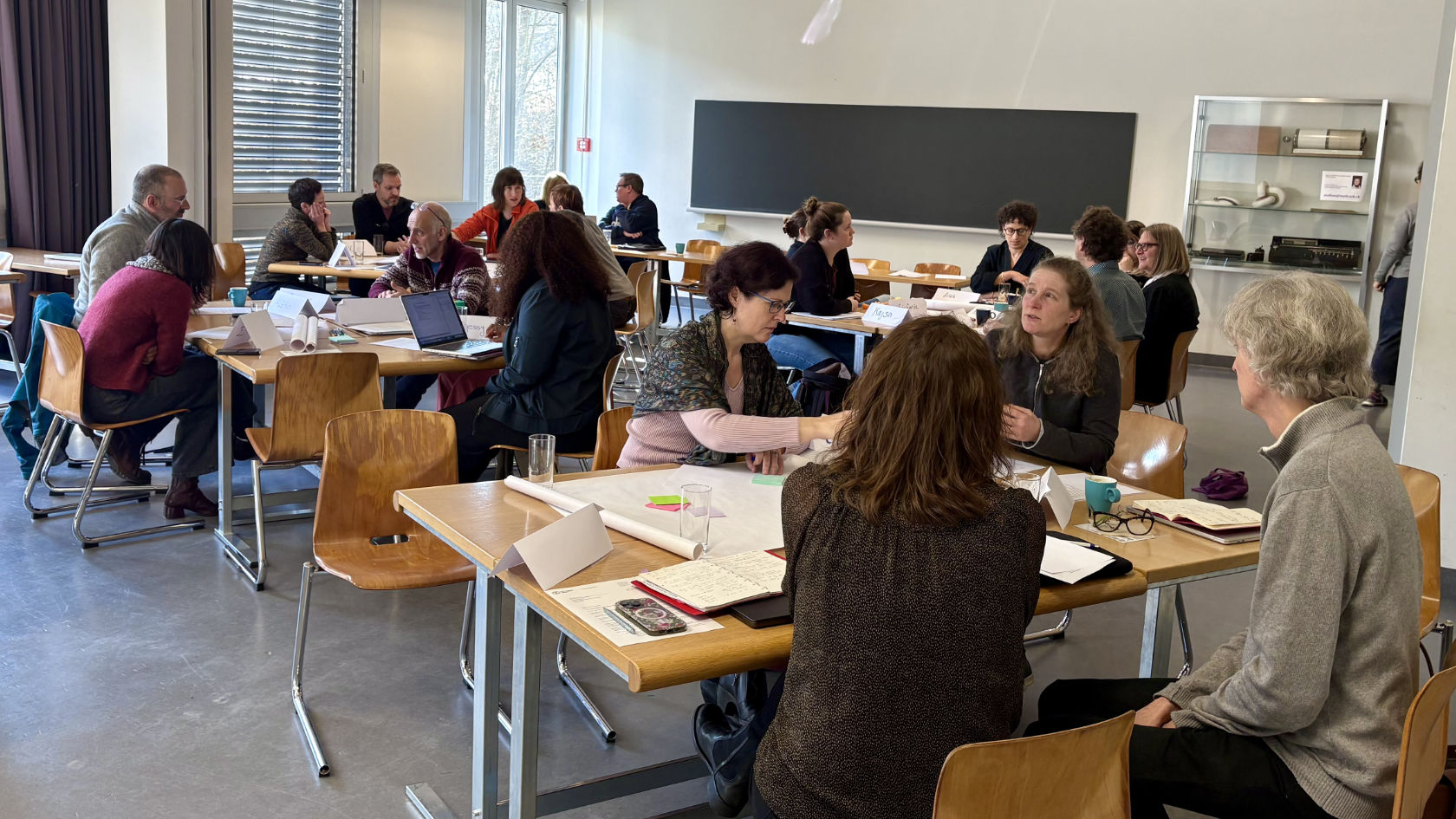
Since February, representatives from the Faculty of Science’s 14 institutes have been attending the first workshops with Athena Swan experts. The questions they are working through are basic but crucial: where does a unit currently stand in the equality process, where does it want to go, and how will it get there? Each unit has set up a self-assessment team for this purpose. In the workshops, the teams are given tools to analyze their current situation – from organizational culture to the causes of a leaky pipeline. “The different steps are discussed openly and transparently by everyone involved,” says Karin Gilland Lutz.
The application then goes through a peer-review process. If the outcome is positive, the Faculty of Science could receive an Athena Swan label – or the equivalent Bronze, Silver or Gold distinction – in early 2027.
The application process is demanding. But the institutes are convinced that the investment will pay off – for example, in attracting researchers, students, and staff. “In the intense international competition among leading universities, many factors matter. This award is an important part of making sure we can continue to attract outstanding researchers in the future,” says Roland Sigel, professor of chemistry and dean of the Faculty of Science since 2017.
Progress, but more to do
The Faculty of Science is applying for the Irish version of Athena Swan. This allows the faculty to take a broader view and include other dimensions of diversity, such as ethnic background. “In recent years, the Faculty of Science has made significant progress in recruiting professors. At the same time, there are other areas we still need to work on, such as sustainability and reconciling caregiving responsibilities with careers and study for our staff and students,” says Ross Purves, professor of geography and co-president of the Faculty of Science EDI Commission.
“Our track record shows that the Faculty of Science is already on the right path,” says Roland Sigel. But experience in the UK and Ireland has shown that Athena Swan can help sharpen and professionalize even well-established equality strategies.
The Faculty of Science is also able to draw on the experience of UZH’s international partner institutions during the application process. Several universities in the LERU and Una Europa research networks have already had positive experiences with Athena Swan. The label is also becoming more important in the European research landscape, which matters for Faculty of Science researchers as well.
The upward trend: this chart shows how the number of women professors appointed at UZH has developed over the past ten years. The figures can be viewed by faculty, while the “All Faculties” option shows the university-wide picture. In 2025, women accounted for 56% of professorial appointments across UZH. In the Faculty of Science (MNF), the figure was 64%.
The proportion of women across all professorial positions as of December 31, 2025: the Faculty of Arts and Social Sciences has the highest share at 45%, followed by the Faculty of Science at 32% and the Faculty of Theology and the Study of Religion at 31%.
Gender equality in everyday practice
At the Faculty of Science, gender equality is now built into appointments, staff development, and the faculty’s broader goals. Internal training has played an important role in this, especially for members of appointment committees. These sessions raise awareness of unconscious bias in selection processes. “We all – women and men alike – are biased in one way or another,” says Sara Petchey. “But there are ways to make sure those biases do not unconsciously shape the selection process.”
The Faculty of Science has also deliberately adapted its recruitment procedures. As a rule, positions are advertised at the assistant professor level, because the pool of highly qualified women candidates is larger at that stage.
“When we recruit at the full professor level, women professors often receive retention offers from their home universities – higher salaries, better resources and so on. They are effectively given golden offers, and rightly so,” says Ines Kohler. Expanding the overall pool is more effective than competing with one another for the same women professors. In some fields, such as computational sciences, the Faculty of Science also competes with industry, which often offers higher salaries and more attractive working conditions.




Targeted outreach
Even highly qualified women researchers do not always see themselves as professor material. That is why the Faculty of Science actively reaches out to promising postdoctoral researchers in Switzerland and abroad and encourages them to apply. Sara Petchey points to a study showing that women often apply only when they meet nearly all the criteria, while men tend to apply much earlier.
The appointment procedure has also changed. Appointment committees are now required to submit a gender-balanced list of at least ten potential candidates together with the structural report. This has not lowered the bar: appointments to tenure-track assistant professorships remain highly competitive.
The Faculty of Science is also proactive when it comes to promotions, approaching institutes and candidates directly. In some cases, successful tenure-track assistant professors have felt they needed to publish more before being promoted to associate professor. The faculty leadership does not let that kind of understatement stand. “If the track record is outstanding, the process is initiated. Simple as that,” says Ines Kohler.
Why role models matter
The Faculty of Science’s proactive approach has also strengthened the sense of community within its institutes. Tenure-track assistant professors are integrated early on and become familiar with the structures of both the institute and the faculty. This is especially important at the Faculty of Science, as many early-career professors come from abroad. That makes the prospect of a chair linked to the tenure track all the more important. “That reliability matters, especially at a stage of life when career planning and personal life can easily come into conflict,” says Sara Petchey.
In recent years, the Faculty of Science has been visibly changed by its data-driven equality measures. Students and early-career researchers benefit from that as well. “Role models are crucial – not only among professors, but across all dimensions of diversity and at every stage of an academic career. When students and early-career researchers see people with similar backgrounds succeed, it boosts motivation, perseverance and confidence,” says Jessy Duran Ramirez, a doctoral candidate and co-president of the Faculty of Science EDI Commission.
Through Athena Swan, the Faculty of Science wants to build on that work, strengthen diversity at multiple levels – and make its progress more visible internationally.