Revolutionary DNA Sequencing
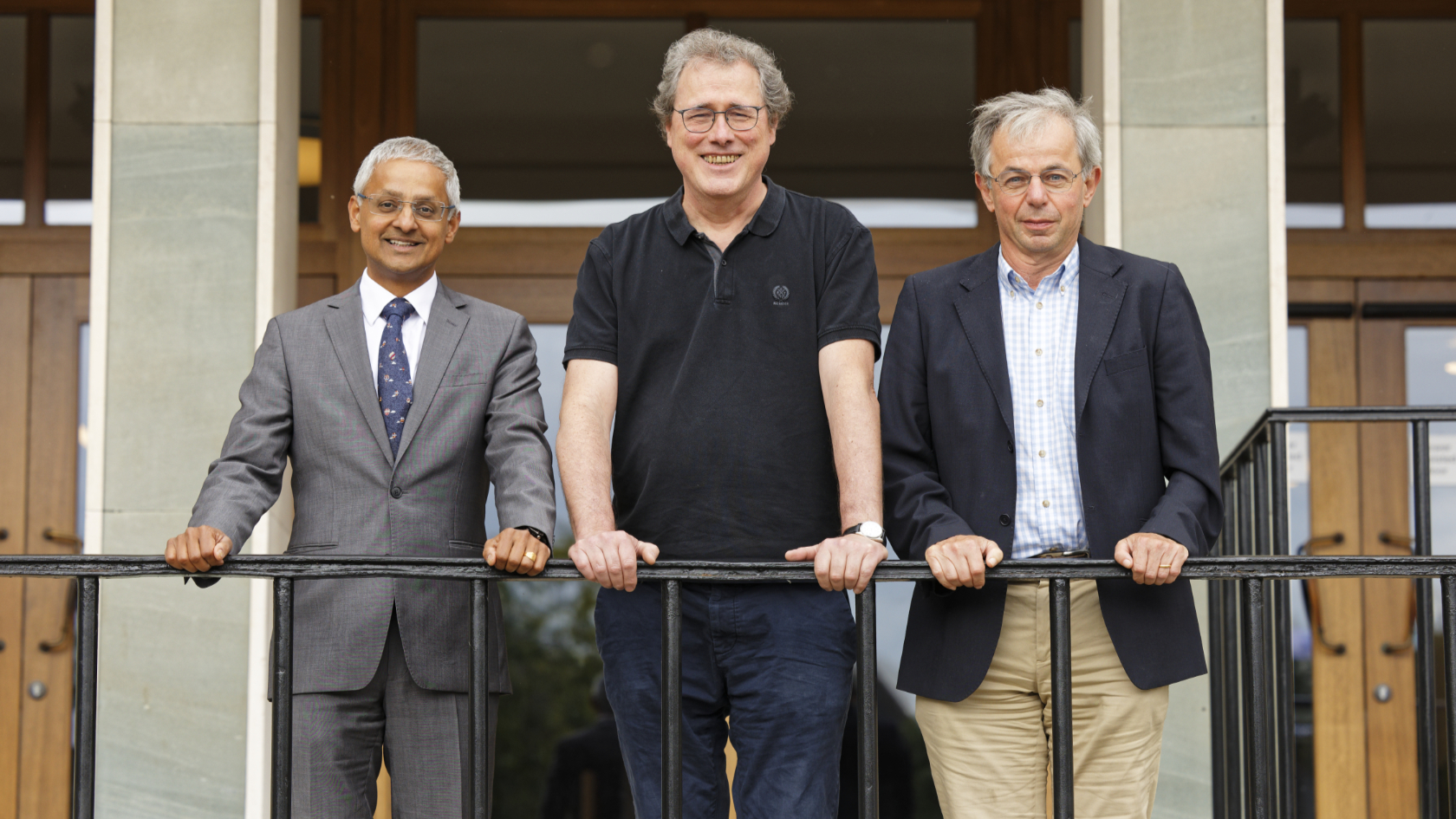
To decipher the first human genome, the Human Genome Project took 13 years, involved thousands of scientists in multiple laboratories and spent around USD 3 billion. The project, which ended in 2003, mapped and sequenced approximately 3 billion chemical base pairs of human DNA. Today, over a million human genomes may be sequenced per year for as little as USD 200 per person. This has been made possible by next-generation DNA sequencing, the current standard in use worldwide.
The technology developed by Balasubramanian, Klenerman and Mayer has given scientists and even non-geneticists worldwide the ability to sequence a human genome equivalent; thus, the technology has been truly democratized and made available to scientists across
“The technology developed by Balasubramanian, Klenerman and Mayer has given scientists and even non-geneticists worldwide the ability to sequence a human genome equivalent; thus, the technology has been truly democratized and made available to scientists across many fields,” writes John Aston, the Pro Vice-Chancellor for Research at the University of Cambridge, who nominated the three scientists for the Gretener-Thürlemann Prize. The University of Zurich awards the prize each year on behalf of the Gretener-Thürlemann Foundation to researchers for their outstanding achievements in medicine, chemistry or physics. The CHF 500,000 prize is to be given this year in the field of chemistry.
Gretener-Thürlemann Prize
The University of Zurich awards the Gretener-Thürlemann Prize on behalf of the Gretener-Thürlemann Foundation to honor scientists from around the world for outstanding achievements in medicine, chemistry and physics. The UZH Foundation, in collaboration with the University, established the prize and oversees its implementation. Awarded for the first time in 2025, this year’s prize will be bestowed in the field of chemistry and is endowed with CHF 500,000 – the largest prize awarded at UZH.
The Gretener-Thürlemann Foundation, established in 2018, is funded by the legacy of Dr. Adolf and Adelheid Gretener-Thürlemann. The Zurich couple shared a keen interest in science and research throughout their lives. Adolf Gretener (born in 1926) studied medicine at UZH and worked as a general practitioner. Adelheid Gretener-Thürlemann’s family was active in the construction industry. Their shared enthusiasm for science led to the establishment of the foundation, which aims to promote long-term research.
The call for nominations for next year’s Gretener-Thürlemann Prize will be published in January 2027.
Learn more about the Gretener-Thürlemann Prize - UZH Foundation
Analyzing DNA fragments simultaneously
How did the technology we know today as next-generation sequencing, for which the three researchers will be honored, come into being? In the 1990s, the young chemists Shankar Balasubramanian and David Klenerman at the University of Cambridge wanted to figure out how an individual enzyme copies DNA. In the course of their work, they came upon a completely new idea: instead of reading a long strand of DNA segment by segment, millions of short DNA fragments could be sequenced simultaneously.
To do that, DNA fragments are immobilized onto a surface. Whenever a new DNA nucleotide is incorporated, it briefly emits a colored fluorescent signal. After each step, the fluorophore is removed and the next nucleotide is incorporated. The resulting images enable the sequence of each individual fragment to be determined.
Afterwards, computers reassemble those short sequences into the complete genome. Thus, the actual innovation lies less in a new chemical method and more in an entirely new principle of parallel sequencing that has transformed DNA analytics from a slow and costly specialty application into a fast and comparatively inexpensive routine.
Over a billion DNA bases per run
After Balasubramanian and Klenerman developed the basic principle of this technology, they founded the company Solexa in 1998 with the goal of technically implementing and commercializing their scientific concept.
Separately from this work, biophysicist Pascal Mayer developed a method to produce much stronger fluorescent signals by creating multiple copies of each individual DNA molecule, enabling much more reliable measurements. Mayer patented this cluster amplification technique through his company Manteia Predictive Medicine. Solexa later acquired this technology and integrated it into its sequencing system, making DNA sequencing more precise, less expensive and scalable for industrial use.
Thus, while Balasubramanian and Klenerman were developing the basic principles of this sequencing technology, Mayer’s cluster amplification technique provided a crucial foundation for its practical implementation. The combination of these two innovations resulted in the dominant next-generation sequencing technology used worldwide today.
The year 2006 marked the market debut of the 1G Genome Analyzer, the first platform capable of sequencing over a billion bases of DNA per instrument run. A laboratory concept had thus been turned into a deployable product. Today, ever more efficient sequencing equipment is being brought onto the market by the company Illumina, which acquired Solexa in 2007. With its modern equipment, several trillion bases of DNA can be read per sequencing run. Solexa-Illumina technology is now the world's leading next-generation sequencing technology, producing the majority of genome data.
Many different applications
However, the next-generation sequencing developed by Balasubramanian, Klenerman and Mayer is far more than just a faster laboratory procedure. It has revolutionized medicine and biological sciences and is used today in a wide array of areas such as personalized cancer medicine, rare genetic disease diagnostics, prenatal diagnostics and the treatment of infectious diseases. During the COVID-19 pandemic, for instance, it was instrumental in detecting new virus variants and monitoring their spread.
At the same time, the technology made whole genome sequencing of a wide range of different organisms possible for the first time, igniting an enormous developmental spurt in plant and environmental sciences, evolutionary biology and numerous other biological fields.
Since genomes can be deciphered quickly and cheaply now, numerous research domains have grown rapidly, including gene regulation research, epigenetics, non-coding RNA research, single-cell genomics, evolution research, and plant and agricultural sciences. The knowledge generated in these fields lays the foundation for new drugs, better diagnostic methods and more resistant crops that contribute to food security around the world.
Shankar Balasubramanian, David Klenerman and Pascal Mayer will receive the 2026 Gretener-Thürlemann Prize in chemistry for the development of their pathbreaking sequencing method, which has fundamentally driven the genomic revolution. The award ceremony will take place at the University of Zurich on November 5.