“I followed my interests, not a career plan”
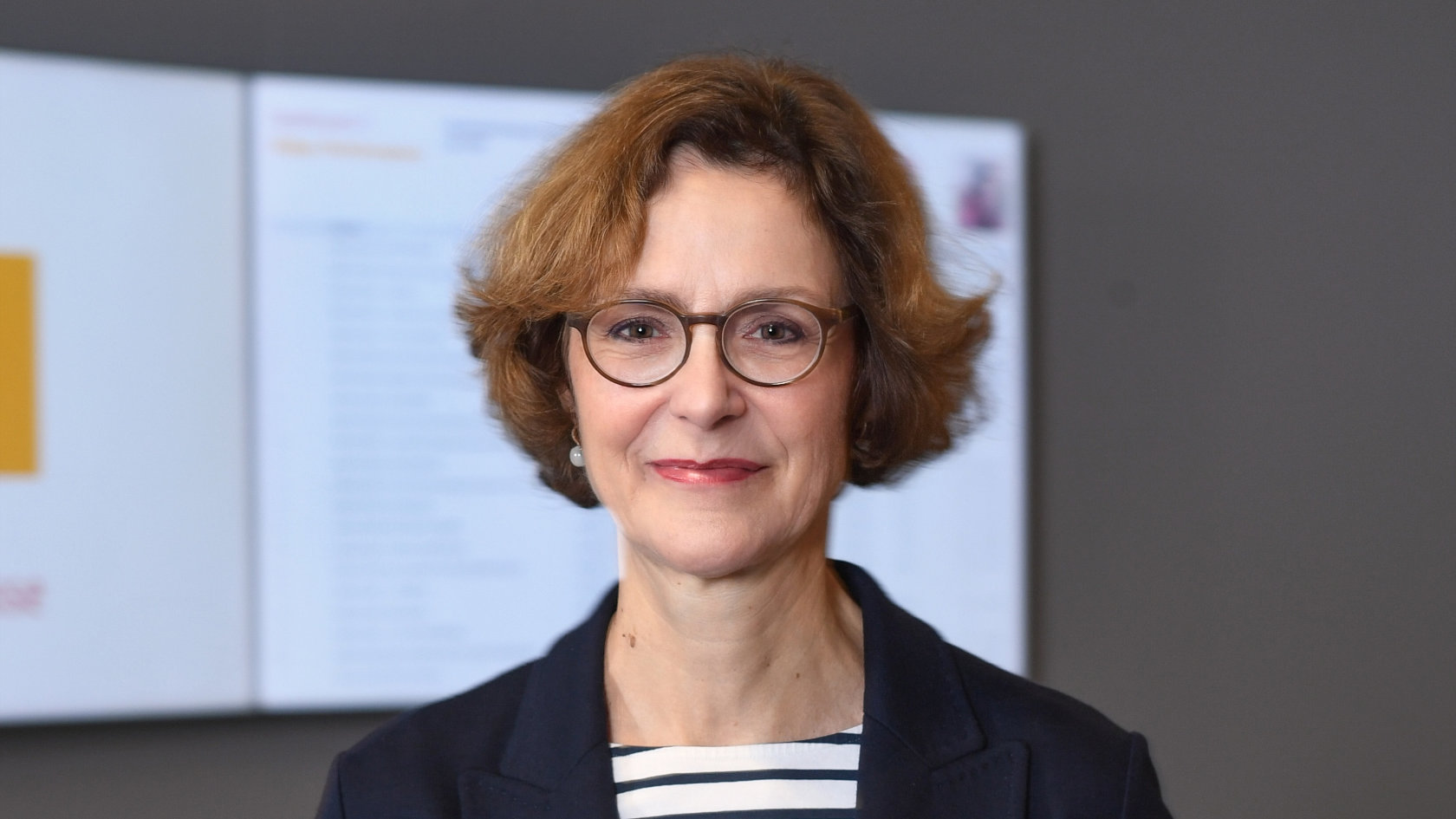
UZH Alumni: You studied literature and linguistics at UZH and later pursued a career in diplomacy, the federal administration and at economiesuisse. To what extent did your studies prepare you for this path?
Monika Rühl: I chose my major very deliberately – out of interest and passion, not with a specific career goal in mind. My focus was on linguistics and literature. I graduated with a degree in Italian linguistics, specifically sociolinguistics, with a focus on second-language acquisition.
Back then, I never would have thought that one day I’d become the director of economiesuisse. What I learned during my studies helps me in my current role. In addition to deepening my language skills – which are a great asset to me as the head of a national umbrella association – my studies taught me, above all, to think strategically and work in a structured manner.
What advice would you give to students who are unsure where their studies will lead them?
Monika Rühl: There are two paths. Either you choose a degree program with a clear career goal. If you want to become a lawyer, you have to study law. In this context, it certainly makes sense to consider which professions are in demand and what they might look like in the future.
Or you can choose a field that you enjoy and are passionate about. That’s exactly what I did. For me personally, choosing a degree program purely for career reasons was out of the question.
Monika Rühl at a glance
- Since 2014: Chairwoman of the Executive Board, economiesuisse
- 2011–2014: Secretary General of the Federal Department of Economic Affairs, Education, and Research (WBF)
- 2006–2011: Head of the Bilateral Economic Relations Division, SECO; Ambassador
- 2002–2006: Personal Aide to Federal Councilor Joseph Deiss, Federal Department of Economic Affairs, Education, and Research (WBF)
- 1992–2002: Diplomat, Federal Department of Foreign Affairs (EDA)
- 1985–1990: Master of Arts in Romance Languages (summa cum laude), University of Zurich
University years shape you not only academically but often personally as well. What memories of UZH have stayed with you the most?
Monika Rühl: I was mentored by an outstanding professor: Gaetano Berruto, a specialist in sociolinguistics and second language acquisition. Working with him was a great pleasure, and I learned a great deal from him.
At the University of Zurich, we were a small group in this department; everyone knew each other. We met at the Department of Romance Languages and were able to deepen our knowledge together. Since I was also frequently in Italy, I was able to conduct research not only theoretically but also empirically.
Every now and then, it’s okay to say: We’re good, and we want to stay that way.
Where do you see UZH’s greatest strengths – and where is there still room for improvement?
Monika Rühl: The University of Zurich is now one of the world’s leading universities and has outstanding professors and chairs. In my opinion, it should emphasize this even more. In Switzerland – and especially in Zurich, with its Zwinglian heritage – we often tend toward understatement. But every now and then, it’s okay to say: We’re good, and we want to stay that way.
After ten years as a diplomat, you became a personal advisor to Federal Councilor Joseph Deiss. What did you learn from working so closely with political leadership?
Monika Rühl: Immediately prior to that, I served as a Counselor at the Swiss Mission in New York. At the time, Switzerland still had observer status at the UN, so it wasn’t a member. Overall, that period gave me fascinating insights into diplomatic work.
As a personal aide to Federal Councilor Joseph Deiss, I then gained a completely different and new perspective. I experienced firsthand how the Federal Council operates – from the preparatory work through decision-making to the follow-up on matters. It was particularly fascinating to observe how dynamics emerge within the Federal Council. This understanding of political processes remains of great value to me to this day.
You subsequently took on leadership roles in the federal administration, including as Secretary General of the Federal Department of Economic Affairs, Education, and Research (WBF). How would you describe that role?
Monika Rühl: Former Federal Chancellor Walter Thurnherr, who himself served as Secretary-General, once described this role very aptly: “A Secretary-General is everything between a general and a secretary.”
On the one hand, you are the Federal Council’s closest political advisor and handle traditional staff and advisory functions. On the other hand, as head of the General Secretariat, you also bear managerial responsibility – for example, for finances, human resources, IT and the organizational processes of the entire department.
I became a diplomat out of conviction and a sense of connection to Switzerland.
With your move to economiesuisse, you’ve shifted your perspective from politics to business. What particularly appealed to you about that?
Monika Rühl: I became a diplomat out of conviction and a sense of connection to Switzerland. I wanted to contribute to our country. During my diplomatic career, I became increasingly aware of the central role the economy plays in Switzerland’s prosperity. That’s why the change in perspective appealed to me.
Today, on behalf of our members, we represent their interests in the political process – that is our traditional lobbying work. At the same time, we are the largest business campaigning organisation in Switzerland and are committed to successfully advocating for economic policy issues at the ballot box as well.
How has your experience in the federal administration benefited you in this new role?
Monika Rühl: I know the federal administration and its processes from personal experience. Today, as advocates, we engage in dialogue with the administration, the Federal Council and Parliament. In this context, it helps to know how political decision-making processes work and when specific issues need to be raised.
How has your view of the interplay between government, business, and society changed?
Monika Rühl: I’ve developed a much deeper understanding of how companies operate and what conditions they need to be innovative, invest and create jobs. At the same time, I’ve become familiar with the network of business associations, which is highly structured and was previously largely unknown to me.
I’ve also become much more aware that companies don’t just bear economic responsibility. They are socially engaged and make an important contribution to the common good. The government, the business sector and society are very closely intertwined.
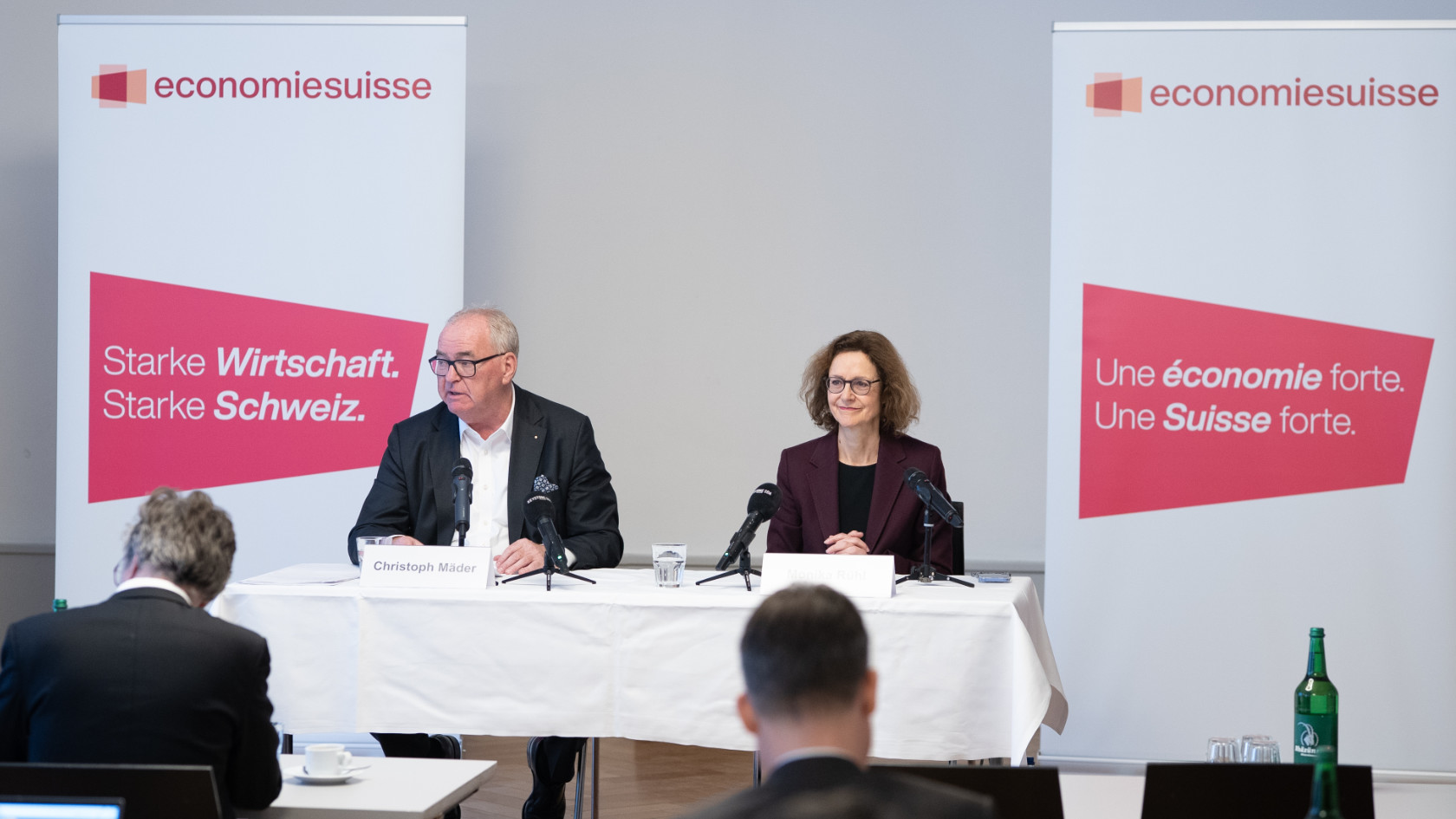
economiesuisse sees itself as a business association rooted in liberal economic principles. Do liberal principles or the interests of its members take precedence for you?
Monika Rühl: Both. We are guided by a liberal compass that emphasizes personal responsibility and seeks to limit government intervention as much as possible. At the same time, we represent the interests of our members.
Of course, there are situations in which these two perspectives do not fully align. Short-time work schemes are a good example. From a regulatory perspective, one might view it critically. At the same time, it has proven to be an effective automatic stabilizer in economically difficult times and is in the interest of companies, employees and the country as a whole.
Are there differing views on economic policy within Switzerland, for example between German-speaking Switzerland and French-speaking Switzerland?
Monika Rühl: Yes, we have a “Röstigraben”, a divide between French- and German-speaking Siwtzerland, particularly when it comes to industrial policy. economiesuisse fundamentally opposes government subsidies to promote individual sectors because such interventions often fail to achieve the desired effect and can exacerbate undesirable trends.
In French-speaking Switzerland, there is sometimes greater openness to government support than in German-speaking Switzerland. Such differing perspectives are part of our political system and must be discussed time and again.
economiesuisse brings together companies and associations with, in some cases, differing interests. How do you manage to develop common positions from this?
Monika Rühl: There is a broad common denominator: attractive framework conditions, low taxes, minimal regulation and bureaucracy and good access to international markets.
Of course, there are also differing interests among individual industries. We bring these together through dialogue. As a bottom-up organization, we develop our positions in collaboration with our members. This can be time-consuming at times, but in the vast majority of cases, it leads to shared solutions.
Where do you currently see the greatest challenges for Switzerland as a business hub?
Monika Rühl: The greatest challenge is international uncertainty: geopolitical conflicts, trade tensions and the declining influence of multilateral institutions such as the WTO. Companies depend on stability, legal certainty and predictability.
At the same time, we must not take Switzerland’s attractiveness as a business hub for granted. In the latest IMD Competitiveness Ranking, Switzerland has fallen from first place to third. This shows that we must continuously improve our framework conditions to strengthen innovation, investment, and productivity growth as much as possible. Good access to international markets – particularly the EU and the US – is especially crucial in this regard.
Referendums force us to engage in continuous dialogue with the public.
How can Switzerland secure its competitiveness and economic openness in the long term?
Monika Rühl: The debate over U.S. tariffs in the summer of 2025 showed how quickly companies – for example, in the Jura region – can be forced to consider moving production abroad. It is by no means a given that companies will continue to invest in Switzerland in the long term. That is why we must do everything in our power to maintain the country’s attractiveness as a business hub and continue to explain to the public why these framework conditions are important.
One of Switzerland’s particular strengths in this regard is direct democracy. Referendums compel us to maintain an ongoing dialogue with the public and to repeatedly explain the importance of an open and competitive economy. While this is demanding and intensive, it ultimately moves us forward because we can bring citizens on board and count on their support.