Between Campus and Society
Frank Weinmann: “Exhibitions leave lasting impressions.”
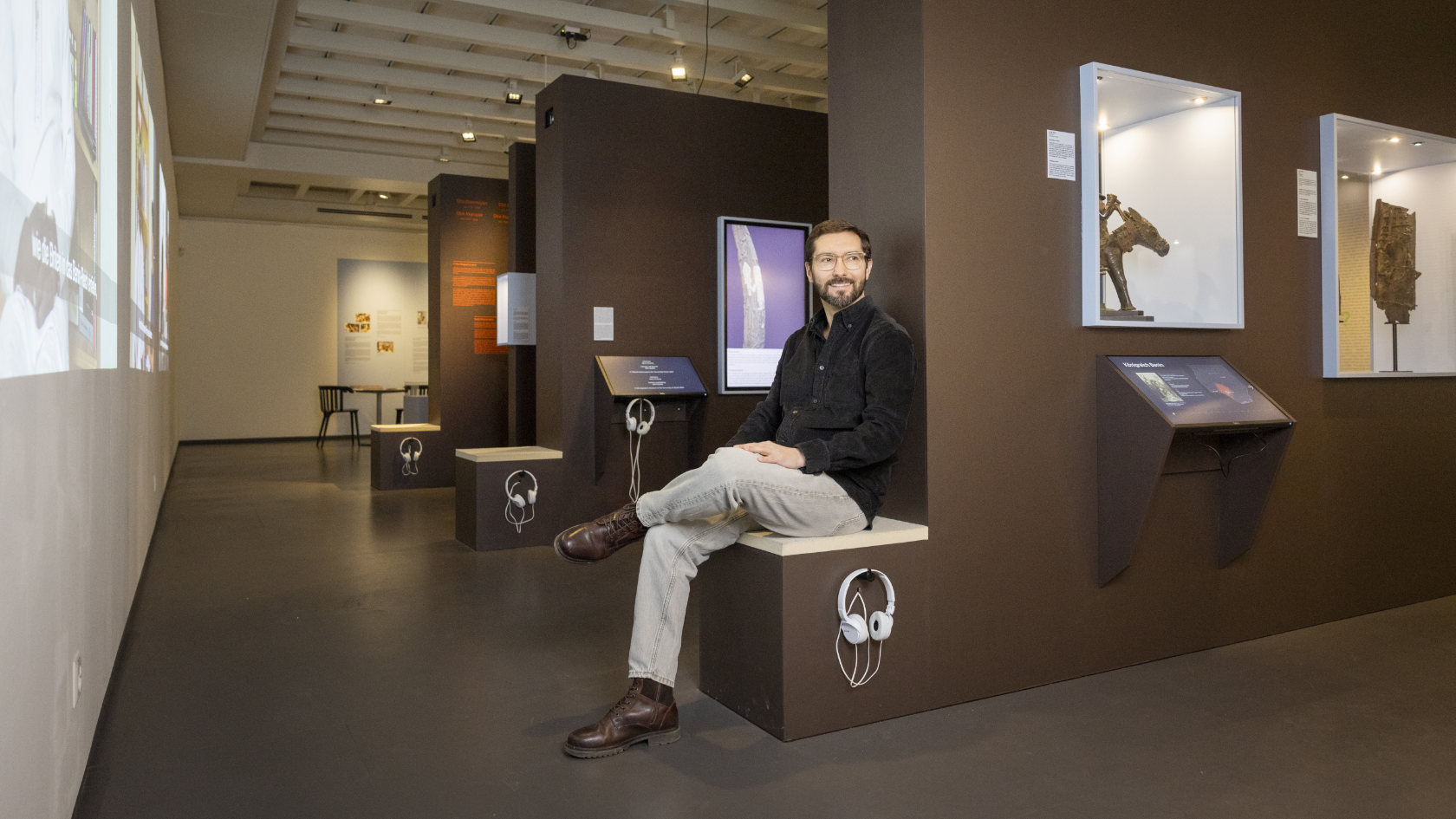
How can research be narrated in a way that moves people? How can knowledge not only be understood, but experienced? What role do aesthetics play in enabling lasting insights? How can knowledge be transformed into an experience? These are the questions I deal with.
I head a small, efficient exhibition management team within the office of Campus Culture. We develop exhibitions in which the general public can explore research conducted at UZH. We’re also involved in events such as the annual Dies academicus celebrations. Our greatest strengths are our university-wide perspective, our long-standing experience and our ability to produce seamless results.
I receive the content for each exhibition from researchers at UZH. This includes important and often completely new academic insights which need to be presented to a broad audience. I’m involved in every step of the creative process, from the first ideas to opening day, and I handle the conceptual and organizational planning.
Sometimes, I can spot visitors stopping in their tracks, exchanging thoughts or being visibly touched. Exhibitions not only transfer knowledge; they can also form connections.
Once the conceptual framework is established, questions of staging can be narrowed down. Where should the information panels be placed? Where would media elements such as projections or spotlights have the greatest impact? Which colors, materials or textures define the atmosphere of the space? Thanks to the technical infrastructure in our workshop, we can create detail-oriented exhibitions in an efficient manner. Most elements are fabricated in-house – including made-to-measure display cases and their furnishings, all color-coordinated to match the overall design concept.
Details make all the difference. For our Benin bronzes exhibition, we used paint free from fumes that might harm the artifacts. For textiles, we make sure the lighting doesn’t bleach the fabric.
It’s important to me that visitors experience our exhibitions through multiple senses. Sometimes, I can spot visitors stopping in their tracks, exchanging thoughts or being visibly touched. Exhibitions not only transfer knowledge; they can also form connections – between people and topics, but also between the university and the general public.
Jeannette Behringer: “My work is an adventure.”
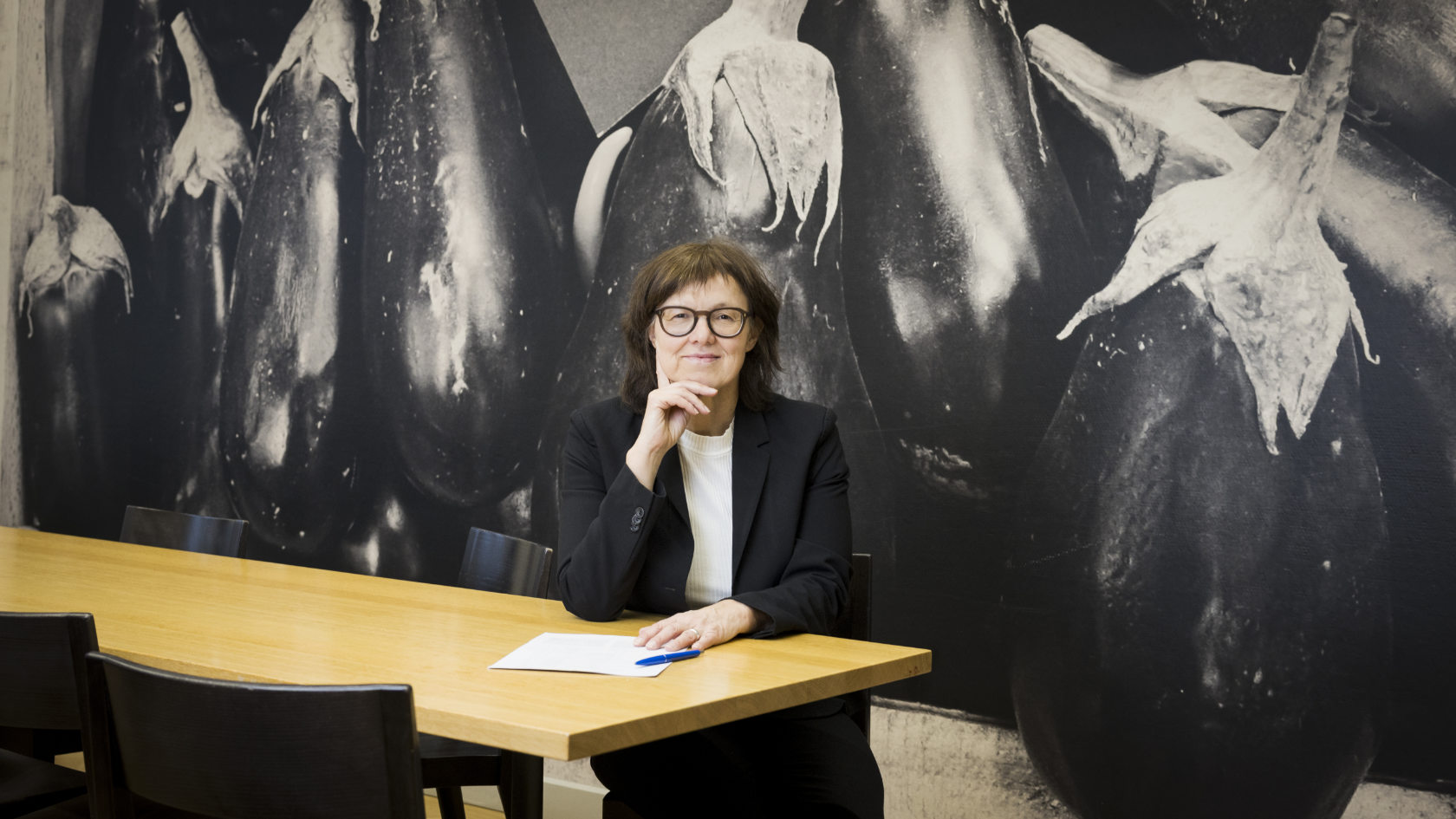
“I consider myself a sort of hybrid. Perhaps that’s the best way to describe my work at the University of Zurich: I work between research and administration, between strategies and seminars. Sometimes, that puts me outside of the proverbial box. But that is exactly what makes this role so appealing to me.
I’m responsible for sustainable development in research and education at the Sustainability Hub. In addition, I conduct my own externally funded sustainability research in the field of sufficiency. Sustainable development isn’t just a buzzword, it’s an ambitious ethical and societal guiding principle. Ultimately, it’s about conserving environmental resources and ensuring equitable access for everyone – as well as the economic and societal changes that this requires.
Higher education institutions face challenges on multiple levels. In the realm of research and education, new conceptual approaches generate new content, new formats and new skill sets for academia. Another important question is how higher education institutions not only generate knowledge, but can also effectively contribute to societal change. These fundamental questions of sustainability research and education are at the core of my work. I advise researchers and teaching staff and conduct workshops in order to promote these concepts within the university.

Ultimately, it’s about conserving environmental resources and ensuring equitable access for everyone – as well as the economic and societal changes that this requires.
This work relies on inter- and transdisciplinary formats in which knowledge is not only conveyed, but in which people work together to find answers to societal questions. On a societal level, solutions can only be found when different disciplines work together; transdisciplinary solutions arise through different forms of knowledge provided by societal stakeholders.
In the study week entitled Sustainable Development and Transformation, which we developed at the Sustainability Hub and conduct in partnership with the School for Transdisciplinary Studies, students from a variety of disciplines come together and work with external partners to address the societal challenges posed by sustainable development.
I also care deeply about the Sustainability Now public lecture series, which is co-organized by the Right Livelihood Centre. The series invites speakers to the university who bring their own experience, knowledge and world views to the table.
A shared, open process
Another exciting endeavor is our RealTransform project, which serves as an experimental platform across four higher education institutions. It brings several different perspectives together: students, researchers, administrators and stakeholders from society. At UZH, 12 people participate in this group, working on a specific topic: sustainable nutrition. As an academic project manager, I don’t make unilateral decrees along the lines of, “You’re going vegetarian for a year now.” On the contrary – participants are encouraged to find out what sustainable nutrition means for them and what measures they want to take. It’s a shared, open process that also explores the role of the university within society.
My role as an accompanying researcher is observational and reflective – I want to understand what conditions make these kinds of cooperations flourish. Will this result in new insights, new ideas, new solutions? I’m excited to find out. It’s sort of an adventure.”