Honing Anesthesia Techniques Using Silicone Animal Models
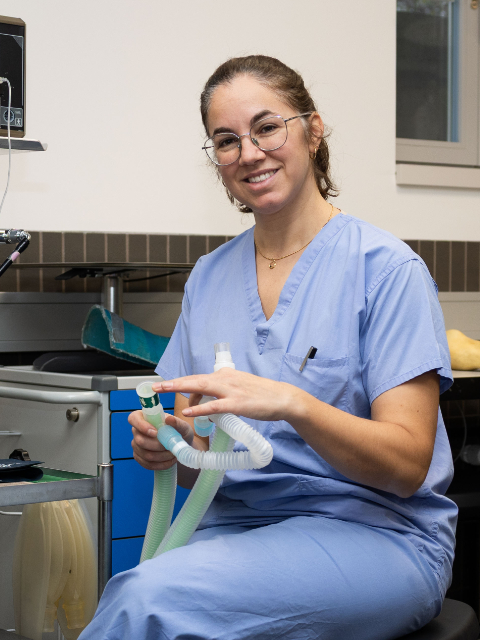
Fabiola Jörger is an attending veterinarian at the Anaesthesiology Section at UZH’s University Animal Hospital. Although her intensive work at the clinic keeps her busy, she also manages the Skills Lab, where veterinary medicine students can hone their practical skills. They work with animal models at one of several stations, which helps ensure they are well prepared for their clinical semesters. The Skills Lab was originally set up in a basement, but two years ago it moved to a better site in a central location, one with “considerable potential for growth,” emphasizes Jörger.
Dry training at the Skills Lab
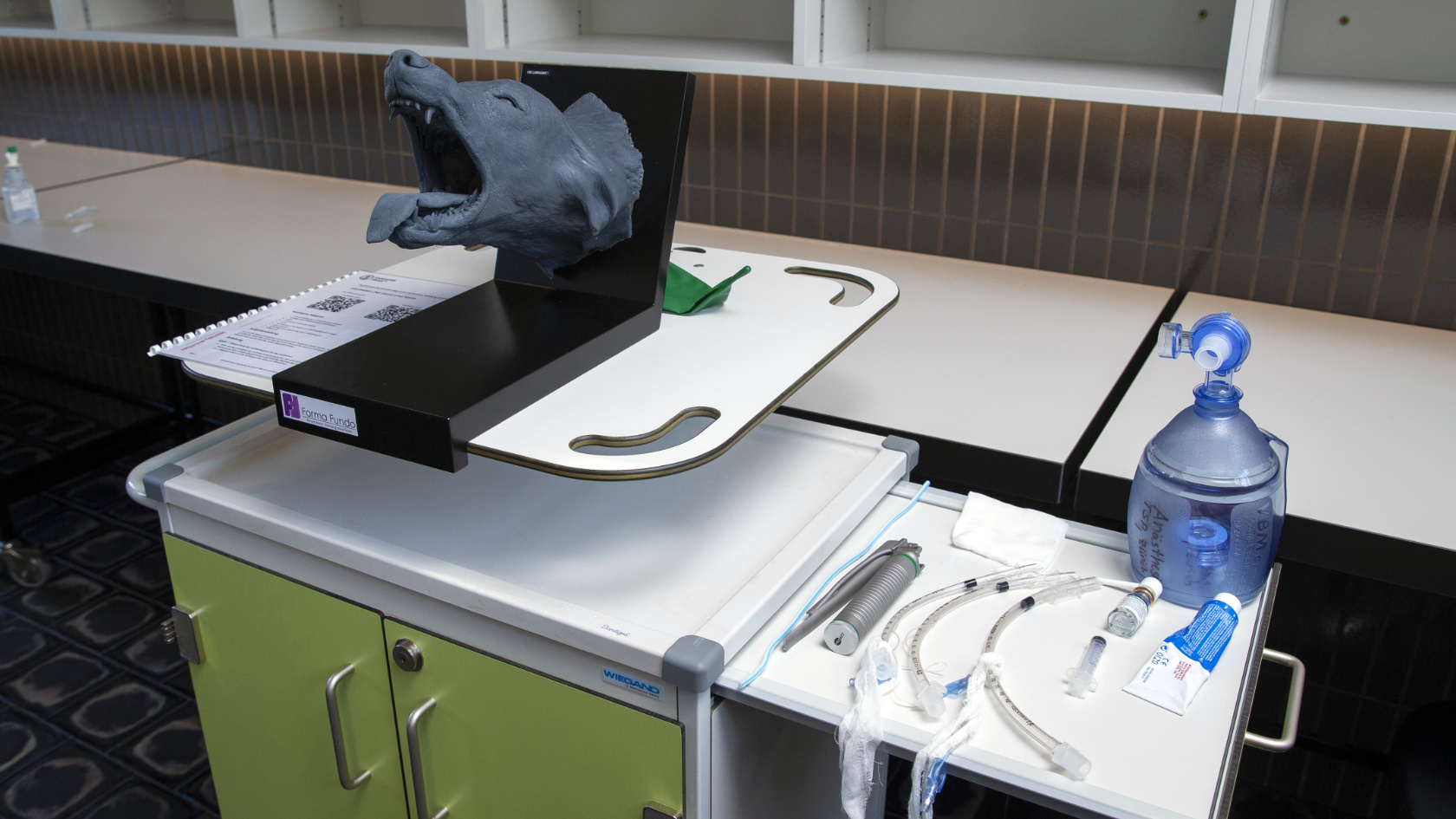
For the first four years of their studies, aspiring veterinarians receive purely theoretical training. Students only begin clinical work – in other words, hands-on experience with animals – in their fifth year of study. To prepare for this, students can start practicing routine tasks at the Skills Lab, for example intubating the treachea of a dog or cat, using realistic, anatomically correct artificial models. The benefits of this approach, known as dry training, are clear: students are better prepared for work in a clinical setting; they are more experienced and confident; and they make fewer mistakes later, which directly improves the welfare and safety of their animal patients.
Combining theory with practical exercises makes much more sense.
Fabiola Jörger received this year’s UZH 3R Award for her anesthesia tutorial, which she has been imparting for several years. By granting this award, UZH recognizes the efforts and achievements of university members who are dedicated to the 3Rs: replacing, reducing and refining animal testing. The award ceremony will be held on 3 February 2026, as part of the UZH Sparkling Research event, which is organized by the Office of the Vice President Research. A second award will go to Markus Seeger and Johannes vom Berg for developing flycode technology that significantly reduces the number of animals needed for drug research and development (see box).
Second 2025 UZH 3R Award for flycode technology
UZH professors Markus Seeger from the Institute of Medical Microbiology and Johannes vom Berg from the Institute of Laboratory Animal Science received this year’s second UZH 3R Award for developing a new technology called flycodes. This technology allows around 25 antibodies to be tested at once on a single mouse. Antibody candidates are currently analyzed one at a time in laboratory animals, but flycode technology accelerates the research and development pipeline for new drugs, greatly reducing the number of animals required. In principle, this new method can reduce the number of animals needed up to 100-fold.
Efficient Development of Drugs with Fewer Mice, news release from 18.03.2025
Improve and replace
In addition to refinement, the tutorials also contribute to another of the 3Rs: replacement. Although Jörger is unable to provide specific figures, she confirms that cast silicone models are helping to replace live animals in the study of veterinary medicine. In Switzerland, not only is approval required to conduct research on laboratory mice, it is also needed for the use of live animals in education and training.

The Skills Lab also features several other training stations with alternative animal models. For example, there is a silicone dog that can be used to practice urinary catheter insertion, and a model horse that allows participants to learn how to insert a nasopharyngeal tube or administer an intramuscular injection. There’s even an artificial dog ear available to work on. Students can also practice routine tasks, such as preparing for surgery and suturing wounds.
Incorporating practical experience
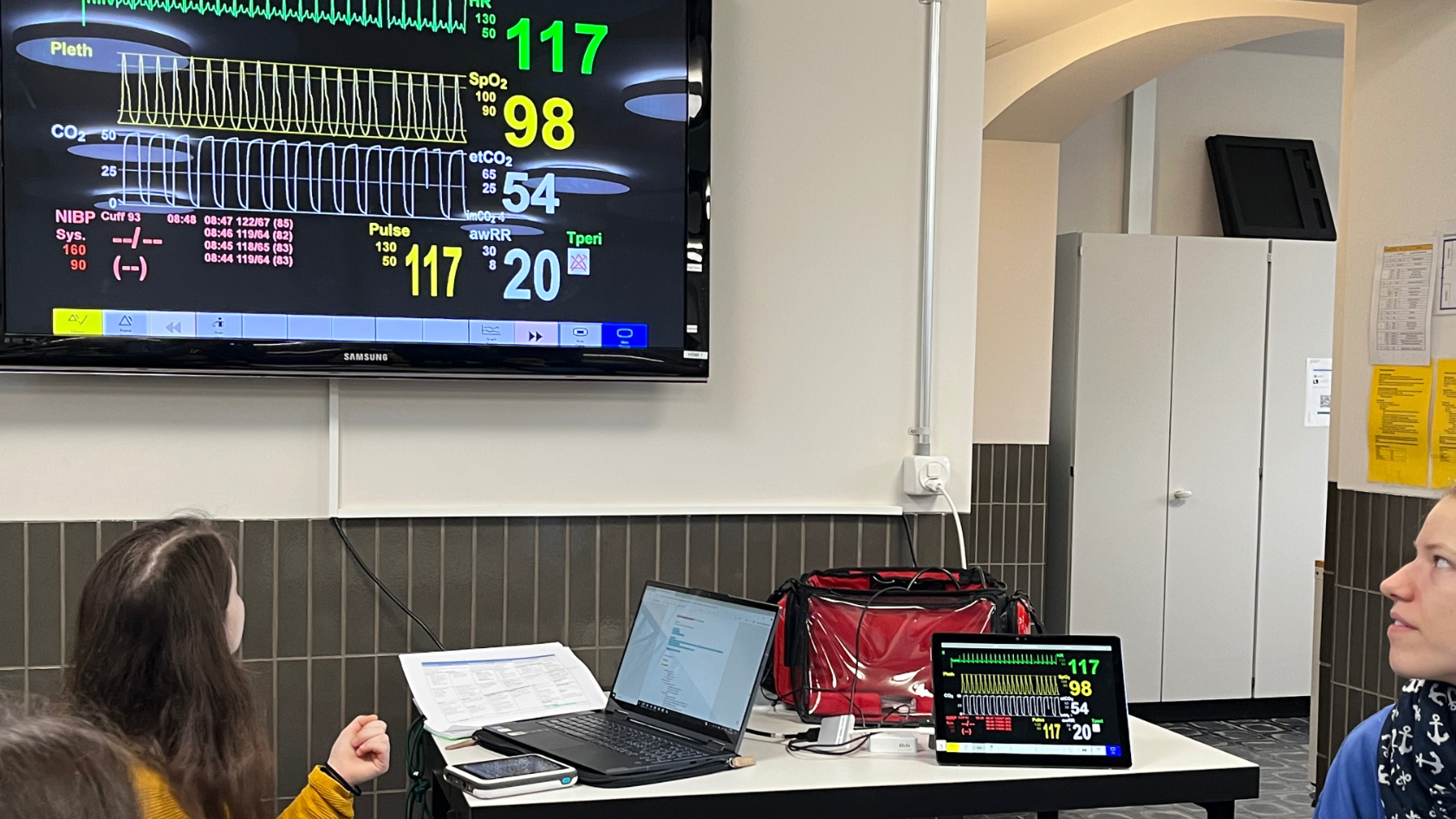
While the models are anatomically accurate, it’s clear that they neither look nor feel exactly like a living animal. To simulate authentic situations as realistically as possible, monitors are used to show what is seen during anesthesia. Various parameters, such as heart rate or respiratory rate, can be adjusted dynamically to simulate challenging situations. The students then need to decide how to proceed.
“When I started with the anaesthesia tutorial at the Skills Lab, it was on a voluntary basis for the students. We only had 24 spots, so the courses filled up very quickly,” says Jörger. This year, the attending veterinarian has adopted a new strategy: she integrated her anesthesia tutorial directly into the curriculum, replacing two lectures. Instead of learning how to intubate the trachea for anesthesia in a lecture hall, students practiced the procedure and techniques directly on an animal model. “Combining theory with practical exercises makes much more sense,” Jörger says.
More than double the participants
Jörger is happy to report that, “in 2025, a total of 71 students took part in the tutorials”. Currently, only two of the three stations at the Skills Lab are integrated into the lecture program. The goal is to also add the third station. In the long term, Fabiola Jörger plans to further expand what’s on offer. For this, she relies on the help of student tutors, whom she trains in advance. However, it can be difficult to recruit people, as fourth-year students have a heavy workload.
Nevertheless, the overwhelmingly positive feedback from participants in the autumn semester of 2025 makes it clear that her and her tutors’ efforts are paying off. More than 94% rated the course as very or extremely useful, while 68% rated their acquisition of skills as high or very high. 63% considered the demands of the training to be suitable, and 58% were satisfied with the workload. Overall, the course was considered stimulating and focused on achieving learning goals.
Statements from students who took part in the anesthesia tutorial in the Skills Lab led by Fabiola Jörger. (Video: Ginger Hobi-Ragaz and Reinhold Briegel, MELS, UZH)