“Crises don’t care about academic boundaries”
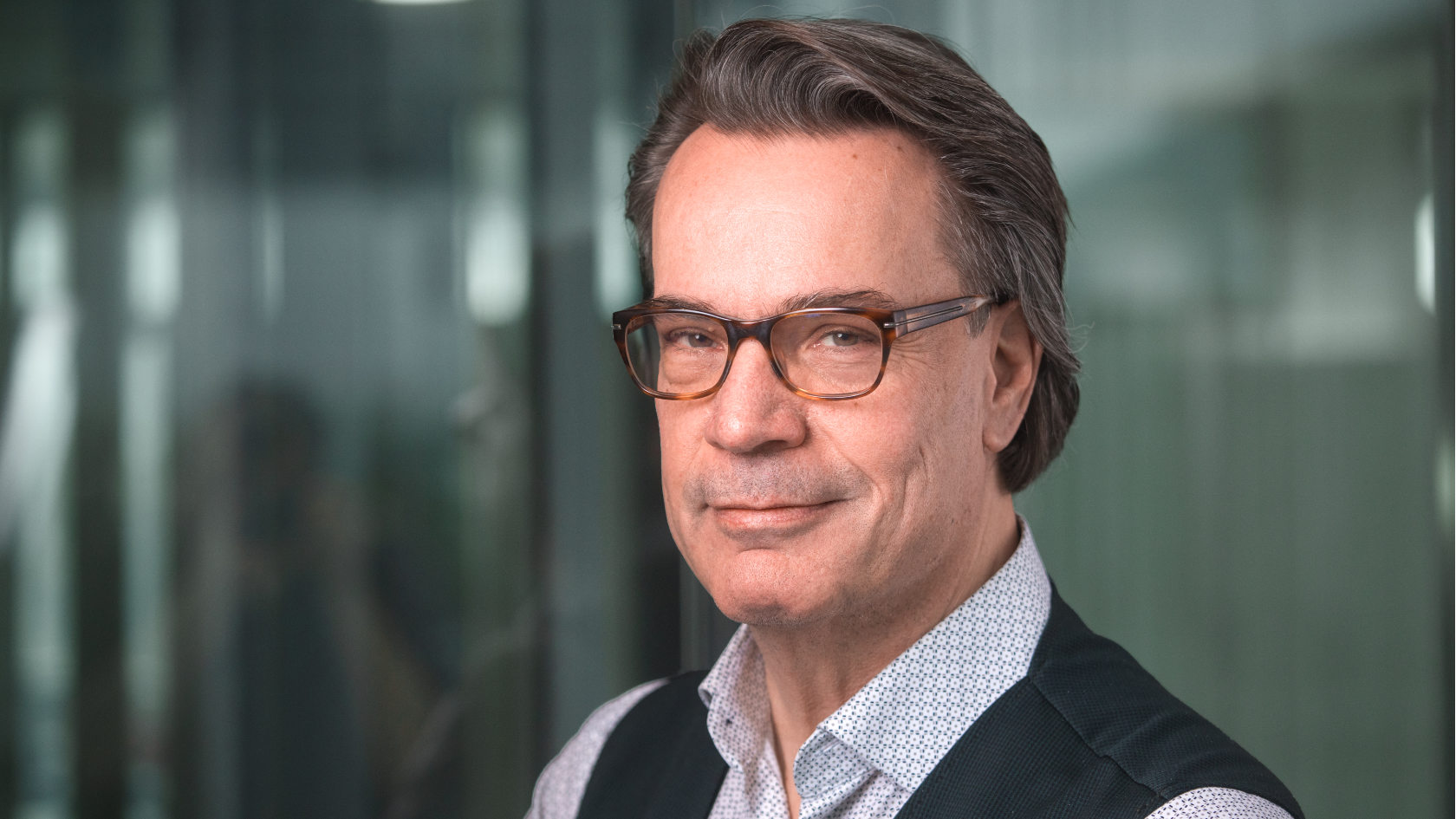
Mr. Eisenegger, you’re co-leader of the disinformation cluster in the new National Science Advice Network. What draws you to the role of scientific advisor?
Mark Eisenegger: In my view, science shouldn’t stay locked in an ivory tower. It should take part in socially relevant debates and give people the knowledge they need to make sense of things. That’s exactly what the National Science Advice Network makes possible. It connects independent scientific expertise with the concrete questions facing policymakers and public authorities.
National Science Advice Network
Initiated by the Swiss federal government, the National Science Advice Network brings together independent scientific expertise for policymakers to quickly draw on in the face of novel threats and systemic risks. With few exceptions, its experts come from Swiss universities and research institutions.
So far, four thematic clusters have been established (public health, cybersecurity, disinformation and international challenges), each led by its own scientific steering committee.
The disinformation cluster, which is still taking shape, comprises 29 researchers from a range of disciplines and institutions. Its five-member steering committee is jointly chaired by Mark Eisenegger of UZH and Anna Jobin of the University of Fribourg. Its other members are Karsten Donnay (UZH Department of Political Science), Menna El-Assady of ETH Zurich and Pierre Vandergheynst of EPFL.
In addition to Mark Eisenegger and Karsten Donnay, five other UZH researchers are involved in the cluster: Emma Hoes (Department of Political Science), Sylvia Sasse (Department for Slavic and Eastern European Studies) and Florent Thouvenin (Center for Information Technology, Society, and Law at the Faculty of Law), as well as Sabrina Heike Kessler and Meg Jing Zeng (both from the Department of Communication and Media Research). This gives UZH representation by seven researchers spanning communication science, political science, Slavic studies, law and computational social science.
On the UZH side, Markus Christen (Digital Society Initiative) sits on the steering committee of the cybersecurity cluster. Milo Puhan (Epidemiology, Biostatistics and Prevention Institute) is a member of the steering committee for the public health cluster.
Back story: The National Science Advice Network grew out of lessons learned during the Covid-19 pandemic. In 2022, the Federal Council decided to reorganize how the government and the scientific community work together in future crises. The concept for the network was approved in late 2023. Coordinated by the Federal Chancellery, the network has been built by the Swiss Academies of Arts and Sciences, swissuniversities, the ETH Board, the Swiss National Science Foundation, the Swiss Science Council and Innosuisse.
You yourself do research on disinformation. How big of a problem is disinformation in Switzerland?
Disinformation can undermine the public’s ability to form opinions and to put their trust in a shared foundation of facts. A majority of the population sees disinformation as a serious problem, and a lot of people encounter it regularly, which was demonstrated in a study that fög will publish in October. At the same time, there are marked differences in how susceptible people are. People who regularly consume high-quality news media have proven to be more resistant to disinformation-driven conspiracy claims than people who get most of their information from social media.
What makes a society especially vulnerable to disinformation, and what protects it?
Heavily polarized environments are especially problematic, since they tend to produce sealed-off communication bubbles where people no longer exchange views based on shared facts. Declining quality in professional journalism also increases the risk, because it leaves people without reliable orientation and context.
Social integration matters too. People need to feel heard and believe that they have a say in political decision-making. Switzerland’s direct democracy plays a key role here. Together with a diverse media landscape, low polarization and trust in institutions, that adds up to an important line of defense.
Many people in Switzerland can now barely tell AI deepfake videos apart from real ones.
How is artificial intelligence making the situation worse?
Artificial intelligence mainly changes the speed and scale of the problem. It now takes little effort to create deceptively realistic text, images, voices and videos, tailor them to specific audiences and spread them using fake identities.
A study by fög shows just how hard it’s become to spot fakes: many people in Switzerland can now barely tell AI deepfake videos apart from real ones. Even a quick tutorial didn’t help them do any better. So neither technology nor individual skill can solve this alone. That said, AI isn’t only a problem. It can also be used to help detect manipulated content or coordinated disinfo campaigns.
The Research Center for the Public Sphere and Society (fög)
The Research Center for the Public Sphere and Society (fög) has worked for many years at the intersection of research, government and politics. It regularly takes part in public consultations and contributes empirical findings on developments in the Swiss media system. The center also regularly produces studies for federal agencies, including the Federal Office of Communications (BAKOM). Recent examples include work on the influence of global technology platforms on the Swiss public and approaches to governing AI in journalism. The Yearbook on the Quality of the Media, put out annually by fög, is not limited to diagnosis, but also points to possible courses of action based on its findings. The center has also been called on for hearings before parliamentary committees, for example on ancillary copyright for journalistic content used by platforms and on the renewal of the broadcasting license held by SRG, the Swiss public broadcaster.
What interests you most about the subject of disinformation?
What I find most interesting is how resilient or vulnerable a society like Switzerland really is to disinformation. The extent to which widespread disinformation actually changes people’s attitudes and behavior isn’t always entirely clear – that’s something we need to research in more detail. Alarmism or downplaying the issue doesn’t get us anywhere either. Scientific evidence can help ground the debate in facts, and that’s something our cluster hopes to contribute to as well.
What can a network like this achieve that individual researchers can’t?
Crises don’t care about academic boundaries. Disinformation has technological, economic, political, psychological, societal and legal dimensions. No single researcher and no single discipline can cover that whole range.
That’s why the cluster brings together experts from different fields and institutions. And we’re not waiting for a crisis to start working together: we’re already mapping out who knows what and figuring out how to work as a team. That means that when a concrete request comes in, we can quickly put together an interdisciplinary team.
In a crisis, it isn’t enough to bring in a few individual experts on short notice.
Have there been any recent experiences that personally drove home for you just how important scientific advice has become?
The Covid-19 pandemic illustrated this most vividly for me. In two studies we conducted at fög, we examined how the Swiss media covered the first and second waves of the pandemic. Scientific expertise was in enormous demand at the time and highly visible in the public sphere and the media. At the same time, we saw how difficult it is to work under time pressure to communicate established knowledge, preliminary findings and uncertainty in a way that people can understand.
Another point is that it was mostly medical experts who were platformed, even though the pandemic affected virtually every area of society. Other perspectives were far less visible, like those from the social sciences. That was an important lesson for me: in a crisis, it isn’t enough to bring in a few individual experts on short notice. We need interdisciplinary structures that have been built up well in advance, plus an ongoing exchange between the government and the scientific community. That’s exactly why the national network was created.
The network is meant to advise policymakers but not make any policies itself. Where do you draw the line?
Our role can be described using the concept of the “honest broker.” Providing scientific advice isn’t just about handing over isolated facts, and it doesn’t require a particular decision from policymakers either. We lay out the current state of knowledge, point to uncertainties and scientific controversies, and present various options for taking action along with their possible benefits, risks and consequences.
Political decisions weigh different values, interests, legal considerations and social trade-offs alongside scientific findings. The responsibility for these decisions lies with democratically legitimated bodies. We provide the best possible basis for decisions, but we don’t make these decisions for them.
Our role can be described using the concept of the 'honest broker'.
How do you make sure science stays independent from the authorities here?
Government agencies define what they need advice on. But our scientific approach to those questions, and how we interpret the results, is entirely up to us as researchers. We aren’t paid for this work, and we’re not bound by any directives.
To me, independence also means looking at topics that may not be getting a lot of political attention right now. What should matter is a topic’s scientific and social relevance, not whether it’s politically convenient or trendy.
Sound research takes time, but in a crisis, decisions often have to be made quickly. How do you resolve that tension?
You can’t fully resolve it. That’s why preparation is key. We connect experts with each another before a crisis even hits so we already know their skill set, and we also study recurring patterns – for example, what factors make a society resilient or vulnerable to disinformation in the first place.
In a real crisis situation, scientists then need to gather the best available evidence and draw clear distinctions: what’s well established, what’s merely plausible, and what do we not know yet? Often there will be no clear-cut answers, especially with unprecedented crises. We can’t try to hide this uncertainty. Scientific advice also has to point out where there are gaps in knowledge.
The advisory cluster is still in the process of being established. What happens next?
The personnel structure is in place. Now we’re working on systematically mapping our members’ expertise, developing shared working methods and firming up our remits with the relevant federal offices.
An important step will be our first symposium at the University of Zurich on November 25. It will combine internal networking within the cluster with external exchange. At the symposium we want to get to know our members’ research priorities, methods and available data sets, essentially building a kind of knowledge map. That way, when a request comes in, we can quickly identify who has the right expertise. In the evening, there will also be a public panel discussion about disinformation with international experts.