Early Institutional Care Lowers Life Expectancy

Children growing up in infant care institutions in the 1950s were well cared for physically and medically, but were deprived of reliable affection and stimulating early childhood experiences. To protect them from infections and infant mortality, the children were largely placed in isolation, spent most of their time alone in their cribs and received less than one hour of interaction with caregivers per day. “The effects of this early childhood psychosocial deprivation are so detrimental that they substantially shorten life expectancy on a scale comparable to well-known health risks like smoking,” says psychologist Patricia Lannen. She has investigated the effects of early childhood placement in childcare facilities in a population-based study, together with a team from the Marie Meierhofer Institute for the Child (MMI), an affiliated institute of the University of Zurich (UZH), and the University Children’s Hospital Zurich.
Higher risk of mortality at young age and shortened lifetime
The researchers analyzed the mortality data of 431 individuals who lived in infant care institutions in Zurich between 1958 and 1961 and compared it to that of a group of 399 individuals from the general population who were born in the same period and region but grew up in their own families. Data on a total of 830 individuals was thus examined and analyzed. The findings of the study are striking: over a period of 60 years, individuals who grew up in infant care institutions exhibited a 48% higher risk of mortality than the comparison group – their life expectancy was shortened by around 12 years on average. Deaths before the age of 40 occurred around twice as often in the group of institutionalized individuals, though the cause of death was often unknown.
The study’s findings show how vital affection and a stimulating environment are in the first years of life. “They play a crucial role in the development of self-regulation and thus also in dealing with emotions and stress in later life,” Lannen explains. “If they are missing, it more frequently leads to risky and health-harming behavior and to increased mortality as a result,” she says.
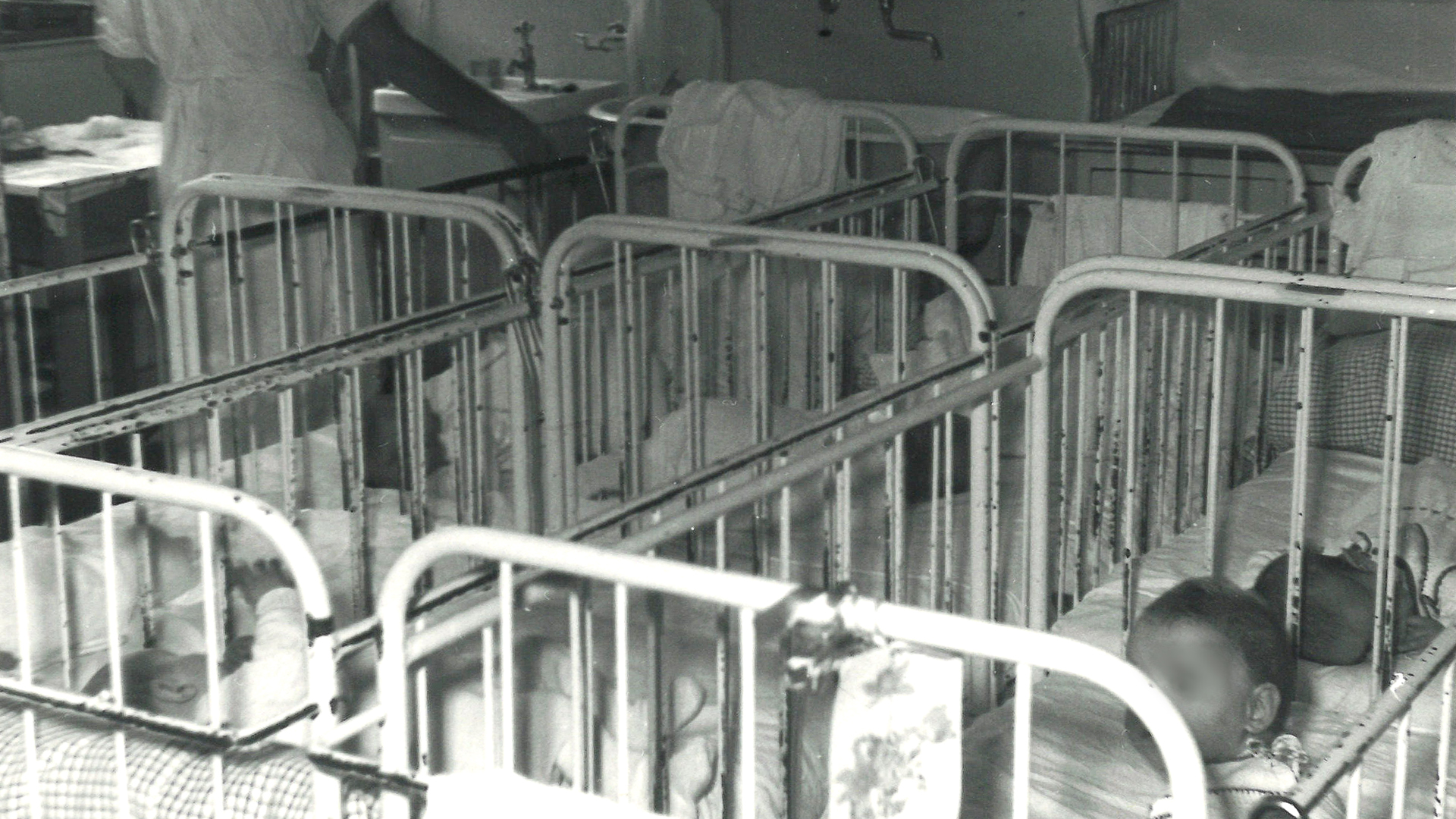
A chapter of Switzerland’s history under critical review
In Switzerland, it was common practice until far into the 20th century to place infants and toddlers in care institutions, often due to societal norms and decisions by government authorities. Children of unmarried or very young mothers – single motherhood was not considered an acceptable family structure at that time – and children of migrant worker families were particularly at risk of being placed in care institutions. This practice was part of a system of “compulsory social measures and placements” that also included indentured child labor, forced adoption and compulsory sterilization, and today forms part of Switzerland’s ongoing efforts to critically reappraise its history and work towards societal reckoning.
Unique long-term data reveal lifelong consequences
To date, relatively little is known about bygone infant care institutions, because many individuals were too young when they lived there to remember the experience later on. While efforts to reckon with historical injustices often rely heavily on contemporary witness testimony, the present study complements this historical understanding by adding a unique long-term perspective into late adulthood: data was already being systematically collected on all children in infant care institutions in Zurich since the late 1950s. This makes it possible to track their development and health over their lifetimes. Moreover, since most of the infants were institutionalized shortly after birth and their birth weights did not differ from that of the comparison group from the general population, detrimental influences prior to institutionalization can largely be ruled out.
The historical circumstances provide a methodologically unique starting point for meaningfully investigating the personal impacts of institutional care during infancy under psychosocial deprivation. The findings express the tremendous suffering caused by a lack of affection and stimulation in early childhood. At the same time, they have global relevance because millions of children around the world continue to grow up under similar conditions in orphanages and other care institutions.
Literature
P. Lannen, H. Sand, A. Chaouch, F. Sticca, R. Paz Castro, F. M. Wehrle, V. Rousson, O.G. Jenni (2026). Survival of the nurtured: A 60-year follow-up study on mortality in institutionalised infants. Child Abuse and Neglect, 176, 108040. DOI: https://doi.org/10.1016/j.chiabu.2026.108040.
Study protocol
P. Lannen, H. Sand, F. Sticca, I. Ruiz Gallego, C. Bombach, H. Simoni, F.M. Wehrle and O.G. Jenni (2021.) Development and Health of Adults Formerly Placed in Infant Care Institutions – Study Protocol of the LifeStories Project. Front. Hum. Neurosci. 14:611691. DOI: 10.3389/fnhum.2020.611691