Over the course of a week, the collaborative UZH and ETH science festival offers an ideal platform for introducing the wider public to the latest research projects.
Social Media Have Only Partially Democratized Climate Communication
Despite a wider range of actors being involved, established voices continue to dominate climate the discourse. Climate change skeptics are disproportionately visible.
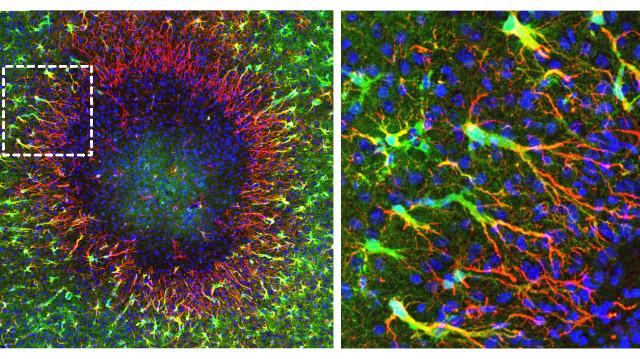
Brain Possesses Greater Self-Repair Capacity than Previously Assumed
A new study using a mouse model shows that special supporting and nourishing cells repopulate damaged areas of the brain by sending newly formed cell nuclei ahead.
Objects long kept in European museums have become accessible again to the communities to which they are connected. Alice Hertzog discusses the return of UZH's Benin Bronzes to Nigeria.
Amazon’s Biocultural Heritage Under Greater Threat Than Expected
Indigenous cultures in the Amazon region will lose up to one-third of the native plant species due to climate change while biocultural knowledge is set to decline sharply by 2080.
Pediatric oncologist Jean-Pierre Bourquin is working to develop gentler therapies and seeking ways of tackling aggressive forms of blood cancer more effectively.
Integrity proceedings conducted by the University of Zurich have found that Professor Adriano Aguzzi bears scientific responsibility for several publications affected by errors. However, no evidence of intentional misconduct or negligence was found. The case therefore does not amount to academic misconduct under the university’s Integrity Ordinance.
Kilian Käslin developed leukemia as a baby. The diagnosis marked the start of a months-long battle for his life that required his family and doctors to give their all.
Environmental DNA Reveals Impact of Climate and Humans on Global River Fish Biodiversity
Human activity and climate influence biodiversity patterns in river ecosystems, as a global analysis of fish biodiversity using environmental DNA (eDNA) reveals.
New Research Center to Improve Support for War-Affected Children in Ukraine
The center, operated by the Nadija Research Foundation, will investigate the long-term effects of war on children’s mental health. UZH’s Michael Schaepman will serve as the foundation's chair.
Evolutionary biologist Andreas Wagner has been awarded an ERC Advanced Grant. Over the next five years, he and his team will investigate a longstanding puzzle in Darwinian theory.
Positive Everyday Experiences Have Greater Impact on Young People than Crises
A new study from the University of Zurich shows that adolescents and young adults describe positive, everyday experiences as shaping their lives most significantly, while psychological stress can change how they view major life events.
Today, many children with cancer can be treated successfully. A new Center of Competence in Research aims to make treatments even more targeted and effective. Read more in the UZH Magazin.
A meritocratic system only works if everyone gets a fair start. Economists Ernst Fehr and Steven Ongena explain how education, a health and social security system and taxation help.
Epigenetic Drugs Could Protect Blood Vessels in Obesity and Diabetes
Researchers were able to use medication to alter the epigenetic “reading signals” in the thin layer of fat surrounding blood vessels, thereby reducing inflammation and improving vascular health.
Dominance-Oriented Views of Masculinity Widespread Among Young Men
Half of young men in Switzerland are concerned that “real men” are increasingly being marginalized in society. A lnew study shows how prevalent restrictive and dominance-based concepts of masculinity are.
Sleep Deprivation Leaves Detectable Traces in Saliva
A research team at the University of Zurich (UZH) has discovered biomarkers of sleep loss in saliva. Acute sleep deprivation can be detected using just a single saliva sample.
Study Shows How Colonial Ties Shape Football Success
Simulations of the upcoming World Cup show that former colonial powers benefit from access to a broader pool of talent, while formerly colonized nations face lower chances of success.
At the 4th World Biodiversity Forum in Davos, biodiversity researchers are joining participants from politics, business, society, and culture to discuss ways to protect biodiversity.
As the National Research Program Digital Transformation comes to a close, a new wave of digital change, driven by artificial intelligence, is already underway and needs to be addressed, says Abraham Bernstein.
Twelve Early-Career Researchers at UZH Receive Academic Excellence Fellowships
In 2026, the Academic Talent Development Fund (FAN) of UZH Alumni is awarding “Academic Excellence Fellowships” to twelve young researchers at the University of Zurich.
The HiBiDiS mission aims to provide new insights into forest biodiversity, answering key questions about climate change. UZH is participating as a scientific partner.
Raphael Morscher, of the University Children’s Hospital Zurich, received the award for his research examining the metabolism of cancer cells as a potential therapeutic approach for neuroblastoma.
A new study by the University of Zurich shows that historically developed monastic forms of co-determination can be a significant advantage for dealing with digitalization.
Hereditary Epilepsy Successfully Treated in Mouse Model
Scientists used gene editing to fix faulty DNA directly in the brain cells of mice, which reduced fever-induced seizures and markedly improved survival rates in an animal model.
Antibody Spurs Nerve Fiber Regrowth Following Spinal Cord Injury
Scientists at UZH and Balgrist University Hospital reveal for the first time how the antibody therapy works: new nerve fibers were found to form functional connections once again.
Social decline – or the fear of it – is pushing people to vote for far-right parties. But trust in government rises when those struggling feel valued and receive support.
Number theory is the branch of mathematics dedicated to the magic of natural numbers. Claire Burrin, assistant professor of mathematics, specializes in this field.
A study of infants who were raised in care institutions in the 1950s shows that the lack of affection in early childhood seriously affects a person throughout their life.
An analysis of bacteria in Lake Zurich reveals that some soil microbes acquire new traits in order to colonize new aquatic habitats, while others reduce their genome size.
The Role of Gut Bacteria in Boosting Cancer Treatment
New research from Zurich shows that the gut microbiome may have an impact on cancer immunotherapy, giving patients who did not initially respond to treatment a second chance.
Inscriptions from the Hellenistic and Roman periods are rich sources of information about life in ancient times. Databases make them available for research.
Political decisions often create winners and losers. As research by economist Maya Eden shows, predictable and transparent criteria can help minimize unfairness.
An international research team investigated ash residues from incense burners. The substances they discovered show that Pompeii was part of a global trade network.
Esther Duflo and Abhijit Banerjee are fighting poverty with rigorous experiments and concrete policies. An interview with the Nobel-winning economists.
There’s no easy way to achieve fair taxation. It takes a bundle of pragmatic measures to close loopholes, minimize false incentives, and tax work and capital evenly.
Victims’ Background Shapes Perceptions of Police Violence
Police violence is judged differently depending on who is affected. When people with an immigrant background are targeted, abusive police actions are perceived as less serious.
HPV Vaccination Uptake in Adults Shaped by Knowledge and Medical Advice
Approximately one in four adults in Switzerland has been vaccinated against the human papillomavirus. A study explores the key factors influencing vaccination uptake.
At UZH, basic research brings about innovative products and applications. Researchers at UZH filed several patents in 2025, and four new spin-offs were created.
Two researchers have discovered a new palm species in the virgin forests of Colombia. Together with an indigenous community, they mapped its geographical distribution.
How can poverty be tackled more effectively? How can companies be held accountable? The new issue of the UZH Magazin explores how researchers at UZH are addressing these questions.
Today’s artificial intelligence (AI) systems have difficulty understanding complex relationships. Benjamin Grewe wants to change this and draws his inspiration from biology.
On school days, adolescents are chronically sleep-deprived. A new study reveals that a flexible starting time can improve their sleep quality, health and academic performance.
The subtropics are particularly affected. Explore animated diagrams and interactive maps that show the extent of the decline in various climate scenarios.
A symposium held last week showcased the wide-ranging benefits of the strategic partnership between the University of Zurich (UZH) and Kyoto University.
At the research gala Sparkling Research, Vice President Research Elisabeth Stark presented seven awards for outstanding achievements in the fields of research and innovation.
One-Third of Young People Are Violent Toward Their Parents
Physical aggression by adolescents against their parents is more common than people realize. According to a long-term study, violent behavior peaks at age 13.
The University of Zurich has been chosen to host two new National Centers of Competence in Research, for childhood cancer diagnostics and treatment as well as muon research.
Pesticides Significantly Affect Soil Life and Biodiversity
Seventy percent of soils in Europe are contaminated with pesticides. A Europe-wide study now shows that their effects on soil life are substantial, as pesticides suppress various beneficial soil organisms.
A team of four researchers has won the UZH Postdoc Team Award for creating an AI tool that can search through thousands of UN documents for information on religion and spirituality.
At the UZH Healthy Longevity Center, researchers working across disciplines are developing solutions that help older people live healthier, happier lives.
Two interdisciplinary projects have been awarded seed funding. One researches topics such as new forms of crime, while the other promotes the accountable use of AI.
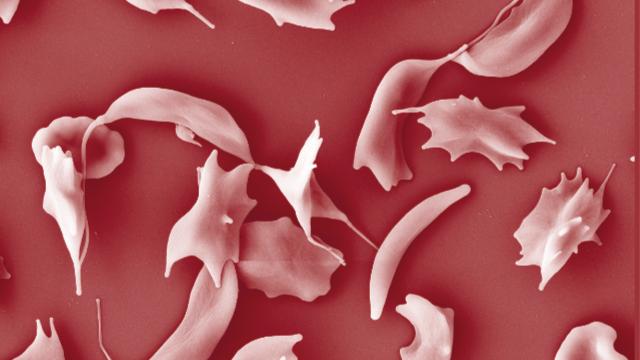
Alzheimer’s Drug Demonstrates Efficacy Against Sickle Cell Anemia
Memantine, a cost-effective drug used to treat Alzheimer’s disease, could also benefit patients with sickle cell anemia in the future. Initial clinical data indicate that the active ingredient is well tolerated.
Researchers at UZH have been working on bio-engineered skin grafts for over 15 years, leading to the founding of spin-off Cutiss that produces living skin tissue from the patients’ own cells.
Staying Single for Longer Affects Young People’s Well-Being
Long-term singles experience a sharper decline in life satisfaction over time and feel lonelier and more depressed – especially in their late twenties.
Genetic Risk Factor and Viral Infection Jointly Contribute to MS
In addition to an infection with the Epstein-Barr virus, certain gene variants are also partly responsible for triggering MS. Together, these two risk factors lead to the autoimmune disease.
How can we influence whether we develop Alzheimer’s disease? Researchers at UZH are examining the factors that trigger the onset of the disease – and those that shield us against it.
A federally funded research project aims to improve the implementation of assistive computer technologies, such as audio descriptions of TV programs for visually impaired viewers.
Although cereals naturally resist pathogenic fungi, powdery mildew can overcome this resistance. Researchers have now discovered one of the mechanisms behind this process.
The modern world offers an abundance of convenience foods. But our Stone Age physiology isn’t built for modern diets, which are taking their toll on our bodies.