Melting Glaciers Top the List

Last year, the UZH media relations team published over 70 media releases and articles about the university’s research findings and institutional developments. As always, not all topics received the same level of attention from national and international media outlets. An internal ranking of the 10 most successful releases shows that, for the first time, UZH’s media releases on climate change topics attracted the greatest attention across the globe.
Alarming glacial melt
2025 was the International Year of Glaciers, and the UZH-based World Glacier Monitoring Service (WGMS) put the issue firmly in the spotlight. Fittingly, two UZH media releases on glacier loss received the most attention. Headlines highlighting an increased loss of freshwater resources and ever-rising sea levels resonated far beyond Switzerland. In UZH’s most popular 2025 media release, WGMS director Michael Zemp calculated that glaciers worldwide have lost an average of 273 billion tons of ice annually for the past 25 years. This stark warning was picked up by almost 1,100 national and international media outlets, both online and in print (read more).
The news article marking the first World Day for Glaciers delivered a similar wake-up call, in which glaciologist Zemp said: “For every tenth of a degree of global warming we can prevent, we save part of the glaciers, reduce the damage and lower downstream costs.” This message was shared by more than 1,000 media outlets worldwide, securing second place on our top-ten list (read more).
Subtitles (EN/DE) are available via the gear icon bottom right of the player.
Geriatric medicine and trust in science
Third place went to the media release announcing that a daily intake of omega-3 fatty acids can slow the biological aging process. The study, led by geriatric medicine specialist Heike Bischoff-Ferrari and her team, generated around 680 articles worldwide, primarily in online media outlets in the United States and South America (read more).
The fourth most popular media release covered an interdisciplinary survey conducted in 68 countries by Viktoria Cologna and Niels Mede. The researchers, who received the UZH Postdoc Team Award for their work, collaborated with 241 scientists from 179 institutions. According to the findings, global public trust in scientists remains relatively high – although Switzerland ranks in the lower middle of the field. The survey prompted 44 media reports in Switzerland and 382 in other countries (read more).
Rock giants and bonobos
In fifth place, a new insight concerning our solar system: a media release published in December by astrophysicists Ravit Helled and Luca Morf challenged our understanding of the interior structure of Uranus and Neptune. According to their calculations, the composition of the two outermost planets in our solar system may be more rocky and less icy than previously thought. This story resulted in around 420 articles, mainly in international media outlets (read more).
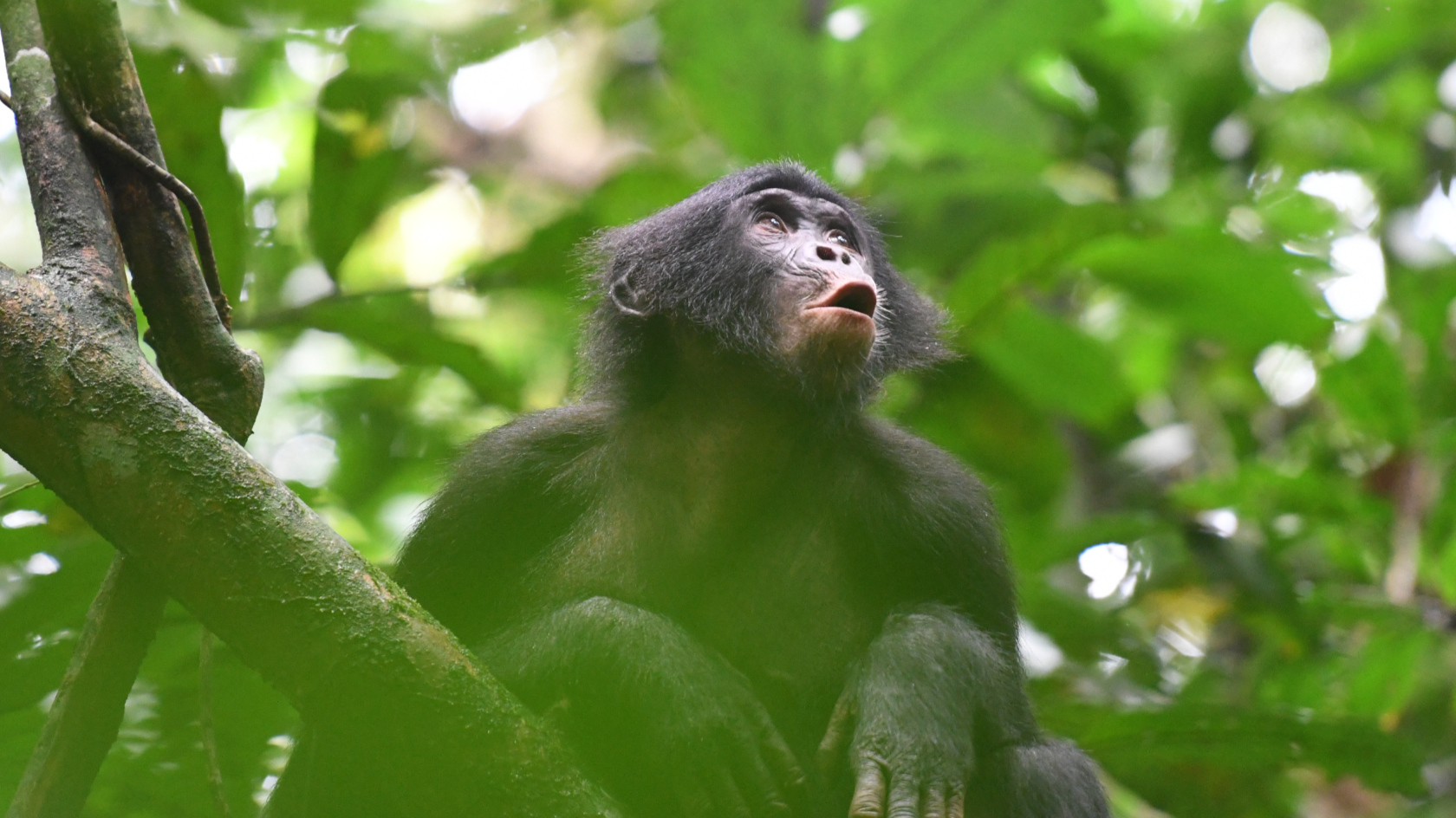
As in previous years, animals found their way into our top-ten list. Bonobos – our closest living relatives – create complex and meaningful combinations of calls resembling the word combinations of humans. This study, conducted by anthropologists Mélissa Berthet and Simon Townsend, suggests that key aspects of language are evolutionarily ancient. The story ranked sixth and was published online in countries including India, Australia and Malaysia (read more).
On the couch and into the woods
The notion that AI language models can experience stress akin to that of humans also garnered considerable attention, prompting the publication of 372 articles in Switzerland and abroad. UZH psychologist Tobias Spiller and his team showed that an elevated “anxiety level” in GPT-4 could be “calmed down” using mindfulness-based relaxation techniques. The researchers believe this could significantly advance the development of automated “therapeutic interventions” for AI systems (read more).
Of course, these approaches aren’t just for machines: according to evolutionary anthropologist Colin Shaw, humans aren’t made for the constant sensory overload of modern life but are still shaped by their hunter-gatherer past. “Our body reacts as though all stressors were lions wanting to attack us,” says Shaw. This story reached a global audience and secured eighth place in our best-of list (read more).
Nobel laureates and stem cell therapy
The media release announcing a prominent new addition to UZH also received wide international coverage. This summer, Nobel Prize-winning economists Esther Duflo and Abhijit Banerjee will establish a new center for development economics, education and public policy at UZH. The news was widely shared, particularly in Switzerland, India and English-speaking countries, and ranked ninth on our list (read more).
A milestone in the treatment of brain disorders rounds out our top ten. A team led by Christian Tackenberg at UZH’s Institute for Regenerative Medicine demonstrated that transplanting stem cells can reverse stroke-related damage in mice and help regenerate neurons while restoring motor functions – good news that was reported 184 times worldwide (read more).