A Level Playing Field for All

Steven Ongena is an economist, but he is interested in something usually explored more by arts scholars: storytelling. This UZH professor of banking is investigating what persuasive power the American dream still holds today. The term was coined by American historian James Truslow Adams in the depths of the Great Depression, in his 1931 book The Epic of America. In the book, Adams describes the American dream as a vision of a country where all people have the chance of a better, more fulfilled and more prosperous life, regardless of their origins.
Yet as a motivator, the American dream has a reach that extends beyond those in the US. It has the same effect on all Western performance-led societies. It is rooted in the meritocratic promise that anyone can be successful if they only work hard enough. “It’s the rags-to-riches story,” Ongena explains. The narrative remains a very powerful one with real-world impacts, as the UZH economists’ research shows.
Stories as a call to action
Joining forces with Jonathan Fu from UZH and Mrinal Mishra from the University of Melbourne, Ongena looked into how stories about the American dream in local newspapers in the US correlated with new company registrations. The team used AI to analyze more than 40,000 articles and categorize their narrative arcs according to the “shape of stories” theory developed by US writer Kurt Vonnegut. The articles were then compared with local data on new businesses.

Narratives motivate people to act, and when they do so in large numbers, there are consequences for the economy.
And guess what they found … “Each article about the American dream published in a given US county increases the number of new business registrations locally by an average of one percent,” is how Ongena sums up the findings. This effect lasts for two years and is four times greater when the story is the classic rags-to-riches one. These happy-ever-after success stories act like a catalyst, clearly galvanizing many people into starting their own businesses. “Narratives motivate people to act, and when they do so in large numbers, there are consequences for the economy,” Ongena continues.
Ongena’s research into narratives was inspired by Yuval Noah Harari’s book Sapiens and Robert J. Shiller’s Narrative Economics. Harari’s hypothesis is that humanity is primarily driven by fiction. American economist Robert Shiller argues that economic events can be explained by more than traditional economic factors such as supply, demand or interest rates. Narrative and collective imagination are decisive. Ongena’s research into the narrative of the American dream supports this hypothesis. Success stories from those climbing the social ladder elevate entrepreneurship overall.
Equality is worth paying for
The core message of the American dream is equality of opportunity. Effort pays off, and anyone willing to make that effort will be rewarded with success. Yet this hypothetical level playing field is more wishful thinking than reality. That was likely also true in the past, but today the paths to social ascent are becoming ever narrower and more arduous. “Equal opportunities demand a minimum degree of actual equality,” says Ernst Fehr. The economist is founder and director of the UBS Center for Economics in Society and Professor of Microeconomics and Experimental Economics at UZH. “Equal opportunities means the everyone starts with the same,” Fehr explains, “but that’s all but impossible. Family, financial and educational backgrounds differ too widely.” In reality, some get a head start in the race of life, the pursuit of success and prosperity, while others are handicapped.
Averse to inequality
Ernst Fehr, Aljosah Henkel, Julen Senn and Thomas Epper investigated what Swiss people think about inequality. The questions covered attitudes to social disparities, and whether there was support for the redistribution of wealth.
The study showed that people fall into three categories here. A minority of around 20 percent is self-serving. They do not care about inequality as long as they are not affected by it themselves. The substantial majority see inequality as undesirable. This group can be broken down into the “inequality-averse” (45 percent) and the altruists (35 percent). “The inequality-averse are distinguished by their willingness to assume costs themselves to help others who have less, by reducing their income, for example,” Fehr states. The inequality-averse therefore tend to support political issues such as the Young Socialists Switzerland’s federal popular initiative “Reduce tax on salaries, tax capital fairly” (the “99% Initiative”), which demanded higher taxes on capital income and relief on earned income in return. The initiative was defeated in 2021 by a large majority.
Altruists also see inequality as objectionable, and are willing to accept costs to themselves to help others, especially those worse off than themselves. “But they don’t have a problem with others doing better than they are,” Fehr notes. As the study by Fehr et al. reveals, a fair and just society is important to the great majority of people in Switzerland. Many are also willing to accept additional costs if it means greater fairness for all.
Literature
Aljosha Henkel, Ernst Fehr, Julien Senn , Thomas Epper. Beliefs about inequality and the nature of support for redistribution. Journal of Public Economics. Vol. 246, June 2025. DOI: 10.1016/j.jpubeco.2025.105350
It is interesting that the great majority of people, in Switzerland at least, have an aversion to inequality. Some 80 percent take a negative view of social and societal disparities, and are even willing to accept costs to themselves to change them. That’s what a study by Ernst Fehr and colleagues found (see the expandable info box above).
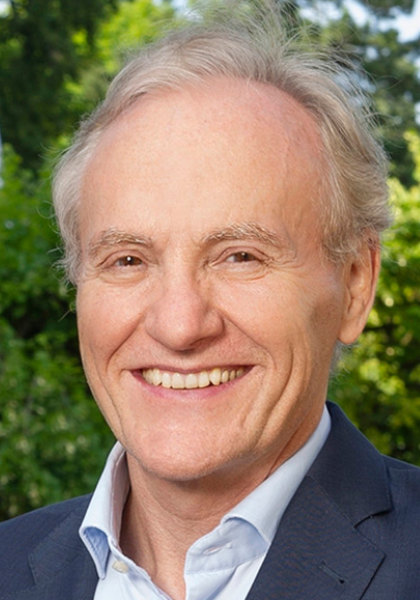
Society has become much richer, but the poorest have not benefited at all.
Switzerland is not the only country to be uncomfortable with inequality, however. It is likely that the majority in all Western societies feel the same way. And yet those inequalities are widening. In the US, the proportion of total income received by the uppermost one percent of the population has almost doubled since 1980. Back then, it was just over a tenth. Now it is a fifth. During the same period the proportion of income accounted for by the top one percent in both Germany and France rose by more than 20 percent. In Switzerland it was more than 25 percent. At the same time, the real incomes of the poorest tenth of the US population have not increased since 1980. “Society has become much richer,” says Ernst Fehr, “but the poorest have not benefited at all.”
Education for more equal opportunities
While the American dream can still become a reality for some, it has probably moved out of the reach of many more. “The degree of inequality in the US is indecent, in my opinion,” comments Ernst Fehr. This crass imbalance cuts against the fundamental egalitarian and meritocratic ethos that everyone should start with an even hand, although not everyone will achieve the same success in the end.
The question is whether the meritocratic narrative still has a place, whether the social frameworks for it (still) exist. If that is not the case, people will stop believing in the story and, with it, the political institutions that create the conditions for it to come true. The growing fragility of this belief is illustrated by the rise of right-wing nationalist and populist parties that appeal to the economic losers of globalization and the liberal economic order. They feel that the current system no longer gives them a fair shot. “That has a politically destabilizing effect,” says Steven Ongena.
What needs to be done to change that? Ernst Fehr and Steven Ongena agree that certain social and political guardrails must be in place to achieve a more-or-less functioning meritocracy. These include a public education system that is open to all and affordable, Fehr explains. Switzerland is a good example here, although there is still room for improvement. Fehr believes early years education is particularly important because it can be a major lever for more equal opportunities.
Also important are social security systems and a healthcare system that protect people against existential risks. It also makes economic sense, Ongena says: “People who are sick or have to live on the street are no longer economically productive. That’s a waste of human capital.” Countries with a well-developed welfare state and health service plus good, affordable education, as in Switzerland and most European countries, offer much better opportunities for upward mobility than the US.
Noblesse oblige
Funding good schools and a functioning healthcare and social security system takes money. Here, too, Ongena and Fehr share the same view: there must be an efficient taxation system, and the tax burden must be shared fairly. “These days, many rich people and many companies no longer pay tax. That’s a problem,” according to Ongena. “Not only because of the lack of money, but also because it breaches the underlying social contract that everyone pays an appropriate share of costs.”
That is why Ongena believes that the elite, in other words those for whom the American dream has come true, have a duty: “It used to be called noblesse oblige: rank comes with responsibility. In the modern age everyone who believes in entrepreneurial freedom and momentum must ensure that the foundations for those things are in place. That means they must do their bit to see that we have good education, healthcare, and infrastructure, and fair rules.”
If the social mobility dream is not to remain an empty promise, if the meritocratic ideal is not to be cast onto the scrapheap of worn-out and abandoned ideas, if we are to keep the American dream alive, then society must become more equitable once again. The will is there, as Ernst Fehr’s research into the fairness preferences of the Swiss population shows. The question is whether it has political legs.