Helping Those Left Behind
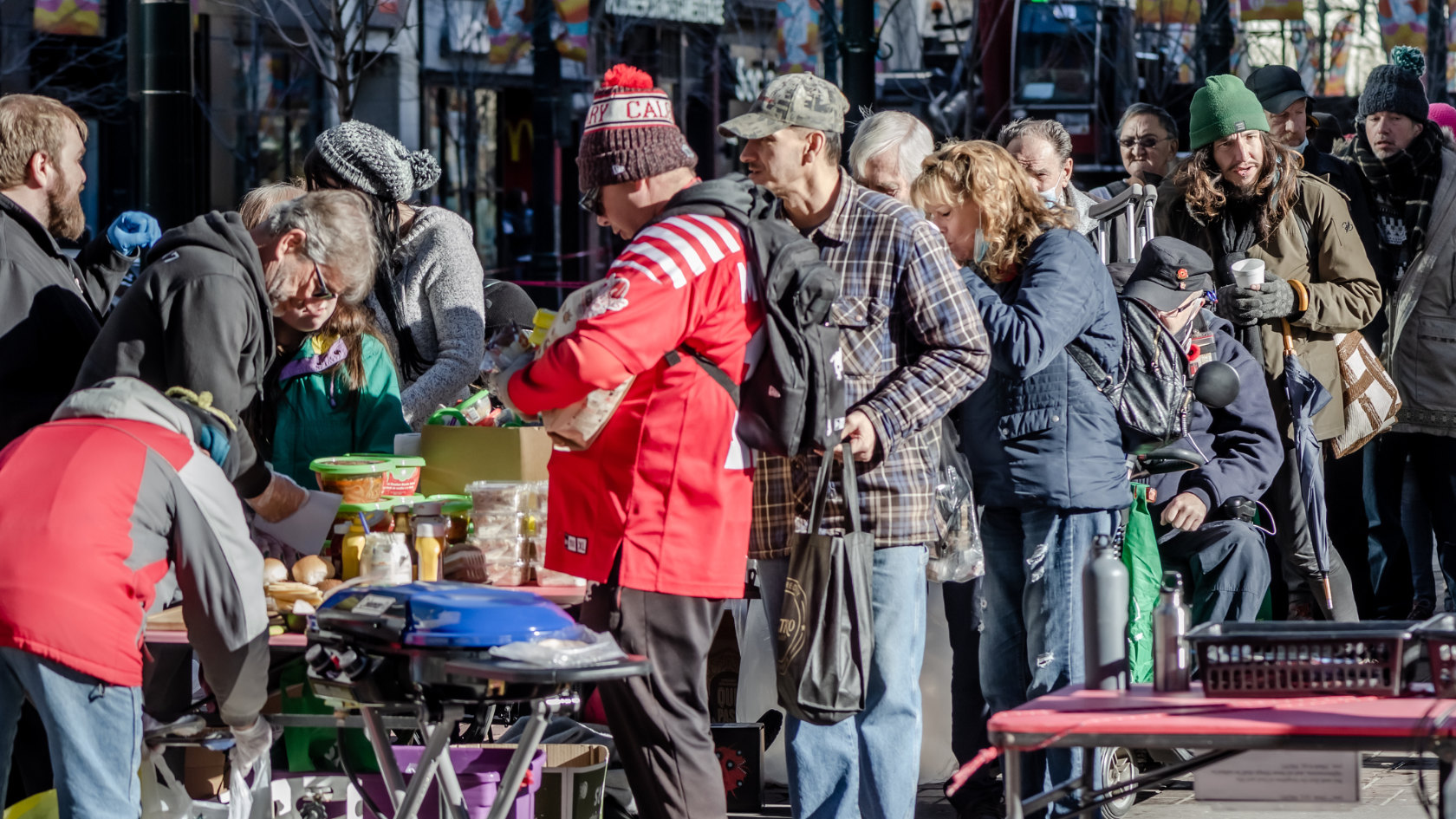
Consider France. When employees are laid off for economic reasons, they can either take standard unemployment benefits or, better still, opt for a Professional Security Contract (Contrat de sécurisation professionnelle, CSP). Here, they not only receive higher unemployment payments for a year but also benefit from reintegration measures ranging from career counseling and retraining to one-on-one support. The program has been running since 2011, with roughly 75,000 people taking part in 2024 alone.
What makes the CSP unique is that it does more than provide material assistance. It also helps people retain their confidence in the political system, even after losing their livelihoods, which then makes them less inclined to back far-right parties. That’s the conclusion reached by political scientists Silja Häusermann, Thomas Kurer, Reto Bürgisser and Susana Tavares, after analyzing data from over a million CSP participants. “When people who lose their jobs are supported through a program that makes them feel valued, it reduces their resentment toward institutions and prevents disillusionment with politics,” the researchers believe.
Preventing radicalization
The findings are significant in two ways. First, they show that policies aimed at helping those hurt by structural economic change indeed make a difference in preventing polarization and radicalization. Second, they shed light on how such policies need to look to achieve such a result.
What really matters is the feeling of relative status loss – the sense of having fallen behind when compared to others.
The key insight is striking: financial security alone isn’t enough, as the desired result is not seen among people receiving only standard unemployment benefit without additional support. Despite receiving state assistance, these individuals still tend to hold more negative views of governmental institutions and are more likely to vote for parties on the far right.
This aligns with what political science research has discovered about why people vote for the radical right. “Economic hardship alone isn’t a strong driver,” Häusermann says, drawing on her own studies. “What really matters,” she explains, “is the feeling of relative status loss – the sense of having fallen behind when compared to others.” Such a feeling makes people become much more likely to vote for far-right parties that promise to restore their standing and give them back a sense of worth.
If the goal is to curb political radicalization and growing distrust in institutions in the face of rising inequality, simply handing out more money – through bigger welfare payments, for example – isn’t enough, Häusermann argues. “You can’t fix the feeling of status loss that way.” This is where the French CSP program seems to succeed where others fail. It shows that while objective inequalities – such as in income or gender – shape people’s lives in profound ways, what really matters in terms of their political attitudes and behavior is how inequality and injustice are perceived. And those perceptions vary widely.
How much inequality is acceptable?
In a large-scale survey conducted in Germany, Häusermann, together with colleagues Delia Zollinger and Tabea Palmtag, compared six different dimensions of inequality, asking respondents how much social and political importance they assigned to each. Their findings push back against a widely held assumption – that left-leaning, progressive parties have lost influence in recent decades by shifting their focus from economic inequality to societal inequality – i.e. paying greater attention to inclusion and equality for immigrant minorities, gender equality and LGBTQ+ rights than to disparities in income, education and social class.
“What we actually see is a sharp divide between left and right over how much inequality is acceptable and what should be done about it,” Silja Häusermann says. “The further to the right voters are, the higher their tolerance of inequality across all its forms.” What makes this divide particularly interesting is that it exists even though people largely agree on the basic principles of justice. Across the political spectrum, research shows that the idea of meritocracy – getting what one deserves based on effort and achievement – is widely seen as fair and legitimate. This also implies that it’s fair for some to have more than others when they have duly earned it.
“Meritocracy,” Häusermann points out, “is inseparable from the idea of equal opportunity.” Equal opportunity, in turn, means that everyone has the same basic conditions for attaining success: security, healthcare and education, and their fundamental needs met. “Much of the modern welfare state,” she says, “is built on exactly this idea – that everyone should have access to a reasonably comparable starting point.” The real political divide, then, is not primarily about the principle of meritocracy itself but to what extent the conditions for it to exist have been met.
Investing in equal opportunities
“From a liberal-right perspective, the playing field is already fairly level,” Häusermann says. Inequalities that arise in the labor market or the education system are therefore considered legitimate – the natural result of individual effort – and are largely accepted as such. The progressive left, by contrast, tends to see structural conditions as still deeply unequal, which means that differences in education, income and wealth can’t simply be attributed to merit. Left-leaning politics therefore focuses either on tackling these structural disadvantages at the root or on correcting their outcomes.
Over the past thirty years, a particular social policy concept has gained traction: the idea of “social investment”. Rather than stepping in after something has gone wrong – replacing a lost income, for example – the state instead invests in equal opportunities upfront: through education, employability programs and early childhood care.
However, these investments need to be carefully targeted to reach the people who need them most. “One problem,” Häusermann notes, “is that such programs often end up benefiting people from social groups whose need is not so great. Career development programs and childcare services, for instance, are often accessed by workers and families who are already relatively well-positioned. “At worst, social investment can actually widen inequality,” she says. “To succeed in reducing the gap, such programs need to be either deliberately targeted at lower-income groups or genuinely universal.”
Far-right parties are particularly skeptical of social investment. Research shows that their voters have different expectations of social policy: rather than investing in the future, it should serve to protect and preserve people’s current status. Accordingly, far-right parties tend to argue for social compensation: instruments like pensions and income replacement schemes that maintain the status quo. Where they differ from left-wing parties, however, is on who deserves to benefit. Rather than spreading these benefits equally across all social groups, the radical right believes in safeguarding the status of specific selected groups at the exclusion of others, such as immigrants. “Even in social policy,” Häusermann says, “it comes down to a status hierarchy between those who belong and those who don’t.”
Lack of solidarity from the West
Status recognition not only matters for social groups. It’s important for nations too, says Nicole Plotke-Scherly, a doctoral researcher working under Professor Stefanie Walter at the Department of Political Science, where her research includes a study of how the Global South is perceived by Western societies.

For many rising states in the Global South it’s not just about material prosperity. They are explicitly seeking political and symbolic recognition.
From the data on the economic rise of countries in that region, the results are clear: the G7 nations are no longer the world’s seven largest economies, whatever the group’s name might imply. According to statistics portal Statista, in 2020 only three of them – the United States, Germany and Japan – still ranked among the world’s top seven. That same year, the combined, purchasing-power-adjusted GDP of the BRICS states – Brazil, Russia, India, China and South Africa – drew level with the G7; since then, it has pulled ahead.
But economic growth doesn’t automatically translate into greater global equality. “Much of the research on the Global South shows that for many rising states, it’s not just about material prosperity. They’re explicitly seeking political and symbolic recognition,” Plotke-Scherly says. These countries would be more willing to engage in collective efforts to reduce inequality, she argues, if they were treated as equals too.
Of course, when some nations rise in standing, others inevitably decline in comparison. For this reason, the latter – currently mainly Western states – often seek to defend their status. As a result, they’re less inclined to act in solidarity with less advantaged countries.
Both developments, Plotke-Scherly notes, are pushing the established international order towards a tipping point, though which way it will tip remains to be seen. Because many rising powers view existing international institutions as Western-dominated, they are increasingly turning to new alternative alliances to advance their interests. “This makes collective action harder,” she says, “because parallel forums and competing alliances fragment international coordination.”
And so, at both the national and global political level, the same pattern emerges: leveling out existing inequalities, or cushioning material loss, is not enough to create a sense of justice. When it comes to people’s perception of (in)justice, objective, measurable inequalities appear to be only part of the picture. Equally important is whether a person – or nation – feels adequately recognized when compared to others. To build a more just world, recognition needs to be fairly allocated too.