Dirty Water, White Gold
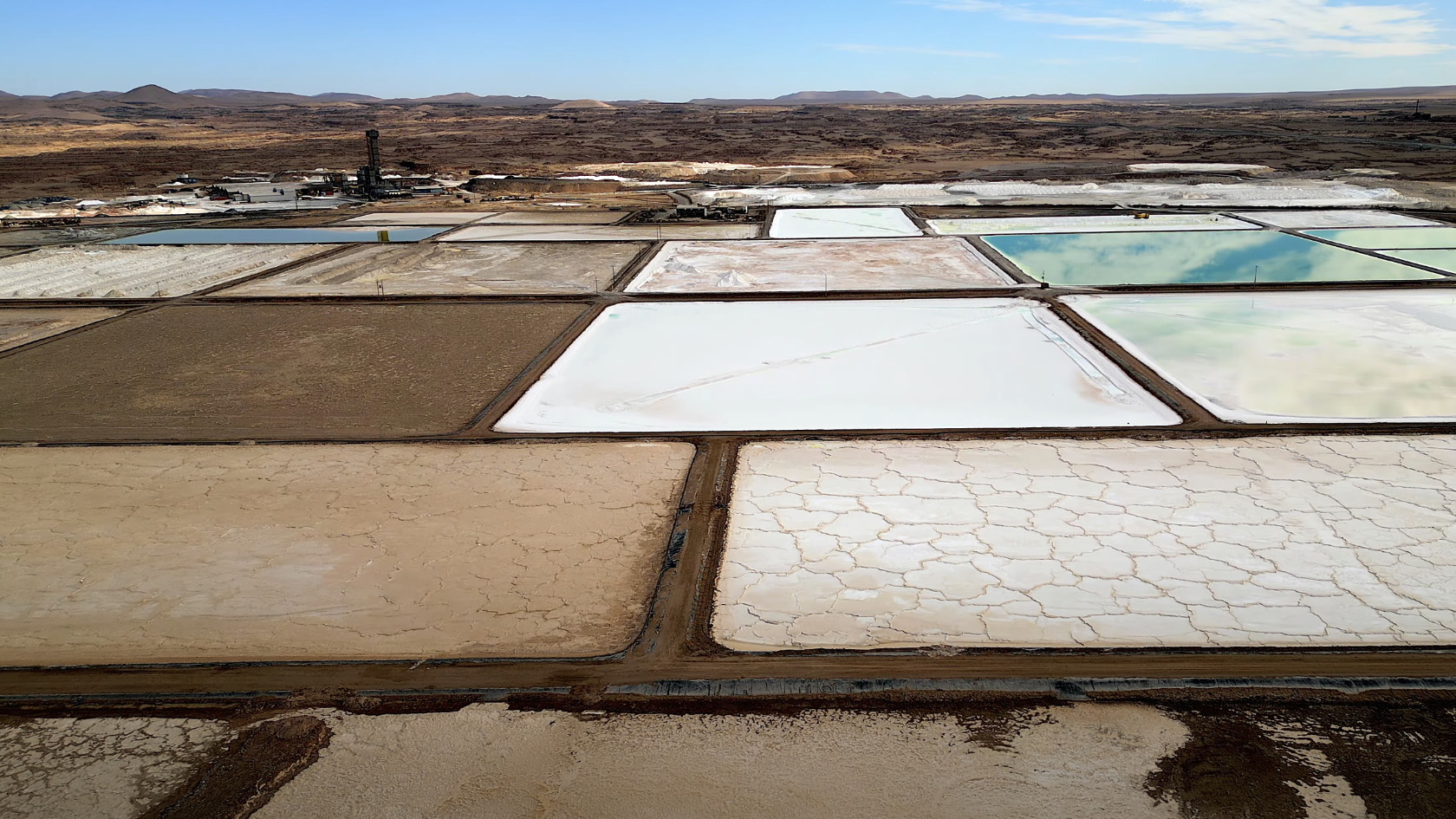
The whole world wants lithium. The light metal is essential for the manufacture of smartphones, solar panels and batteries for e-bikes and electric cars. And demand is surging. Currently, around 80,000 tons of lithium are produced every year globally; by 2030, the German Federal Institute for Geosciences and Natural Resources expects this figure to increase seven-fold.
This is a problem, as lithium mining, which is supposed to power the transition to green energy, is itself not very sustainable. It has a huge adverse impact on the environment and on local communities in the production regions. The world’s largest reserves of so-called “white gold” are stored in the Lithium Triangle, which stretches between Bolivia, Chile and Argentina. The sought-after raw material is extracted by pumping brine out of the ground and then evaporating it. The production process dries out the land and contaminates the water.
Arsenic in drinking water
“When I was in the region, I was advised not to drink the tap water as it contained arsenic, which is hazardous to health,” says Christine Kaufmann, “but you only hear about that in the street; officially, there is no mention of it.” However, large-scale lithium production not only causes contaminated water, it also results in the loss of what was originally arable land, which is an additional threat to the livelihoods of farmers in the already barren region.
Who is accountable for this problematic situation, which is also a violation of human rights – such as the right to health and the right to a healthy environment? Is it the local government, companies that produce lithium, firms that make the batteries, companies that sell them, or consumers?
These are the kinds of questions that legal scholar Christine Kaufmann grapples with. She chairs the Steering Committee of the UZH Centre for Human Rights Studies (UZHR) and her research focuses on the principles of responsible business conduct. As chair of a working group at the International Organization for Economic Cooperation and Development (OECD), she played a leading role in updating the guiding principles on responsible business conduct. These guidelines are designed to help identify and minimize the negative impacts of business on human rights, the environment, working conditions and corruption. They have been adopted by 52 countries.
Reviewing supply chains
So, who is responsible for the problems in the Lithium Triangle? “Originally, it was assumed that it was solely those who directly contaminated the water, but since 2011, people have been taking a more nuanced approach,” says Kaufmann. This is when the UN adopted the new Guiding Principles on Business and Human Rights. These principles specify that companies are responsible for the whole supply chain – in other words, the company in Europe that buys batteries to build electric cars also has a duty.

These days, the discussions I have with companies are no longer about whether human rights apply, but about how.
“Of course, there are degrees – the companies that use arsenic to extract lithium, for example, bear greater responsibility than the buyers of batteries,” says Kaufmann, “but even the latter need to pay attention to ensuring that human rights are respected.”
Many companies are aware of this, including in Switzerland. “Things are still far from perfect,” says the legal scholar, “these days, the discussions I have with companies are no longer about whether human rights apply, but about how.” This was different 10 years ago, when you were discounted as a starry-eyed idealist if you mentioned the term human rights in connection with business.
However, Christine Kaufmann – who also advises businesses on human rights questions at the UZHR – has noticed that many small and medium-sized enterprises in particular are out of their depth when it comes to the “how”. “For example, one company wanted to check whether child labor was being used by one of its suppliers in Bangladesh,” the researcher explains, “but it had absolutely no idea of how to approach the problem.” In this case, the UZH human rights expert started by explaining the legal requirements, and then working with the company to formulate questions in a way that is understandable in Bangladesh. “This allowed us to collect a great deal of information,” says Kaufmann, “for example, if a supplier says they work with 13 families who weave carpets, that’s a sign that we need to take a closer look.”
Clearer regulations on corporate responsibility
Many large Swiss companies also deal with human rights issues – but to varying degrees. Some support their suppliers and invest in training for them. “These companies don’t just tell their business partners what they need to do to put in place standards, they also help them do so successfully,” says Christine Kaufmann. However, there are also some black sheep, for example in the commodities sector, that pay too little attention to compliance with human rights standards. It is therefore important, says Kaufmann, that corporate responsibility is regulated in a more standardized, clearer and more effective way in Switzerland.
The new Responsible Business Initiative, which was submitted in 2025 and could be voted on later this year, also calls for clearer regulations. An initial initiative on this topic only just failed to win a cantonal majority in 2020. One of the demands in the new version is for large Swiss companies to be held legally accountable for damage caused by subsidiaries or suppliers. The Federal Council has announced a counterproposal. “To me, it doesn’t matter whether it’s the initiative or the counterproposal,” says Kaufmann, “but I firmly believe that Switzerland must do something.”
For instance, to be on an equal footing with the EU, which passed a Supply Chain Act that sets out due diligence obligations for companies on environmental and human rights issues. There is no comparable legislation here in Switzerland. “Switzerland should respond to this, if only because many companies supply EU countries,” says Kaufmann, “we shouldn’t simply carry over everything from our neighbors though, but instead make sure that the actual requirements are equivalent.”
In general, the regulations need to be more coherent, less complicated and more integrated. For example, in Switzerland, due diligence obligations have been set out on child labor and on the handling of minerals from conflict regions. “Why that is not the case for forced labor of adults, which also happens often, is not clear and needs explaining,” says Kaufmann. The role of Swiss courts in liability cases involving environmental damage and human rights violations also remains unclear.
A current case in the canton of Zug is interesting in this regard. The inhabitants of the Indonesian island of Pari have filed a lawsuit with the cantonal court there against the cement company Holcim. They are holding the company partly responsible for climate change that is causing sea levels to rise and increasingly threatening life on the island. “It’s a milestone that this case was admitted as Swiss law is not clear on the relationship between business and climate change,” says Kaufmann. Precisely this gap would need to be addressed in future to clarify how existing law could be applied to such situations. It will therefore also be interesting to see how the Zug cantonal court judges the case brought by the Indonesian island dwellers.
Ideology-free debates
It remains to be seen how the new Responsible Business Initiative will fare at the ballot box. What is already clear though is that political debates around responsible business and human rights are emotionally charged. “The oft-cited argument that this is a matter of left wing versus right wing, falls short, however,” says Christine Kaufmann. Human rights is not a left-wing issue, and this is not about good or bad people. We need to move away from ideology and de-mystify the debate.
Instead of immediately writing off human rights due to a lack of support, the legal scholar advises taking a fact-based and pragmatic approach. The problem is not a lack of recognition of human rights, but rather how they can be applied and enforced in specific situations. It is therefore important to directly name problems – if it concerns contaminated drinking water, for example – and then seek solutions.
What also makes little sense is when companies start by investing a great deal of effort in developing extensive and abstract policies on dealing with human rights and environmental issues. “Instead, they should start with the people affected and work backwards, and ask themselves how the situation could be improved. That’s a much more effective approach,” says Kaufmann. For this reason, companies should also seek dialogue on the ground and talk to representatives of employees, government and NGOs locally.
Christine Kaufmann does this too. “We academics need to get out of our offices,” she says, “at any rate, I can’t research human rights without dealing with humans.” She therefore not only liaises with companies, but also regularly exchanges with representatives at the UN Indigenous Peoples’ Caucus, which campaigns for their rights. “As researchers we can bring facts to the discussion in a way that is free from ideology and build bridges between law and business,” says Kaufmann. To make corporate responsibility more effective – for example in the Lithium Triangle.