40,000 Kilometers by Train

I am not a saint: I have flown a lot, partly for research and international symposia, partially for holidays. In 2024, it became too much: 14 countries on five continents in one year left me struggling with my own sense of guilt for massively contributing to global warming, and I decided to reduce my footprint in subsequent years. No more flying for me for at least one year.
Much of my paleontological research is based on my fieldwork in Morocco, so this was my first concern. Can I get to Morocco without flying in a reasonable amount of time? Luckily, thanks to the Faculty of Science’s sustainability fund, I did not have to cover the higher costs of ground transport through my research project. My first Google Maps search indicated that I could get from Zurich to Tarifa within 24 hours, which would include some buses in Spain (which sounded exhausting, honestly).
Then, there were rumours about night trains to Barcelona, but as you likely know, this hope was shattered by Swiss Federal Councillor Albert Rösti (although it looks like there are new plans for such night trains and at least there are now promising night buses). In any case, this gave me hope that I could continue my work (and attend two international symposia) in Morocco without flying.
An Easy Start: Zurich – Toulouse (983 km)
Of course, there were other rail-based trips I had planned. A visit to Toulouse for a geological-paleontological conference was easily organized. On the way there, I stop at my favourite restaurant in Lyon Part-Dieu, where I change trains after arriving from Geneva. On the French high-speed train (TGV), working on manuscripts works perfectly for me: no distractions, comfortable seats, and if it gets noisy, I simply put in earplugs.
Zurich – Isle of Coll (2106 km)
Another long trip took me to Scotland. Planning this trip was trickier, as within the United Kingdom I had to book tickets through various companies. In the end, it was mostly fun. Well, passport control before boarding the Eurostar in Paris or London is a nuisance… Obviously, Brexit is annoying for far more important reasons, but this is a very concrete one, costing me time in countless queues.
Anyway, once I boarded the train to Oban, the journey became fun. The old-fashioned train winds through lovely Harry Potteresque scenery, with the carriages brushing past the scraggly bushes growing along the tracks. Rainbows, castles and quaint villages filled this trip with memorable sights, which made it easy to ignore the young couple smoking pot on the train.
This was a holiday trip to the Isle of Coll, from where we were taken by a small boat to various locations to snorkel with basking sharks nearly 10 meters long, seals, elegant jellyfish and other glorious marine wildlife.
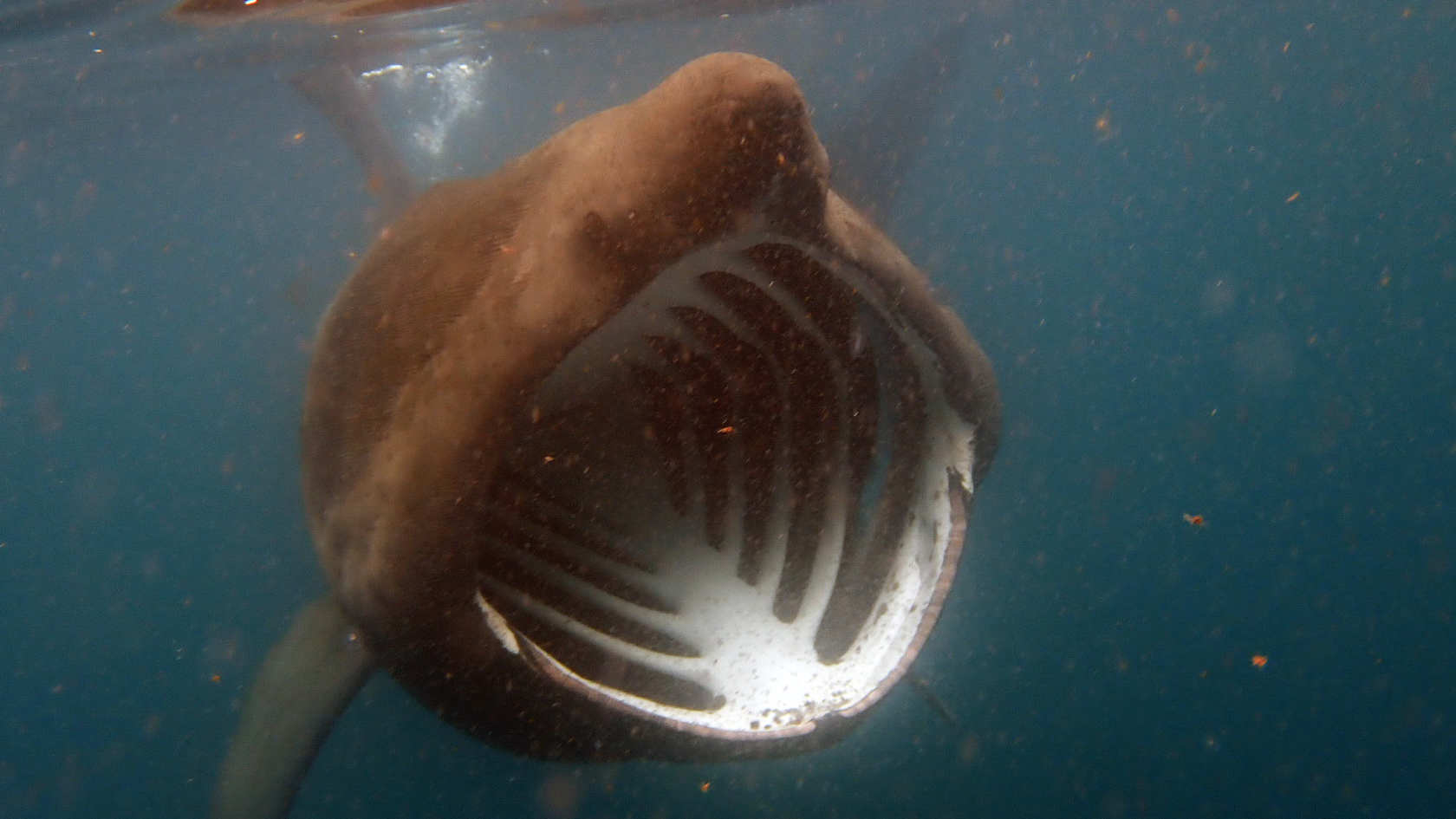
The journey home became a bit messy, because I had accidentally booked one of the first legs for the wrong day, so I returned a day later than planned – and I had to spend some extra money to buy the tickets again. The great underwater memories made me forget about this setback in no time.
Morocco Part One: Zurich – Berrechid (2,769 km)
Then, the first trip to Morocco trip approached in September. Luckily, a friend had recommended a small company to me to help me plan the journey: SimpleTrain . This company is run by friendly young people based in Zurich who organize and optimize complex itineraries for those who want to avoid flying – perfect for me.
I sent them my schedule and received several suggestions with a two-day ferry journey from Genoa, which I declined. In the end, they came up with a reasonable route via Geneva, Lyon, Barcelona, Algeciras, Tangier and Casablanca to Berrechid, where I was scheduled to give a keynote lecture at the International Congress on Palaeontological Heritage.
The train rides to Málaga and the bus to Algeciras went smoothly, although the bus was delayed by one hour. What I didn’t know at that point was that the ferries are always delayed. So ideally, you just turn up and take the next ferry. Lesson learned.
Once on board, I stayed on deck because I love feeling the elements and I hoped to see some wildlife. I knew that there are orcas and dolphins in the Strait of Gibraltar, but I did not know how realistic it was to expect any sightings. And although the ferry was disappointing in some respects, the views were certainly not. On all six ferry crossings these past six months, I have seen sunfish, dolphins, plenty of seabirds, a sea turtle, a few other fish, and comb jellies.
On the first trip, I (and some French tourists as well) learned that there is not just one port in Tangier, but two. Instead of docking at Tanger Ville, close to the city center, we arrived at Tanger Med, a gigantic industrial harbor outside the city where, among other goods, many Dacia vehicles, which are now produced in Morocco, are shipped.
From there, I still had to take a taxi to cover the 43 kilometers to Tangier, causing me to miss my train to Casablanca. Luckily, there were later trains.
The Moroccan high-speed train, dubbed “Al Boraq”, is based on the French TGV. It is the fastest train in Africa, and takes you quickly and comfortably from Tangier via Rabat to Casablanca. When I reached the terminus, I spent a peaceful day on the coast and visited the gigantic Hassan II Mosque before making my way to Berrechid.
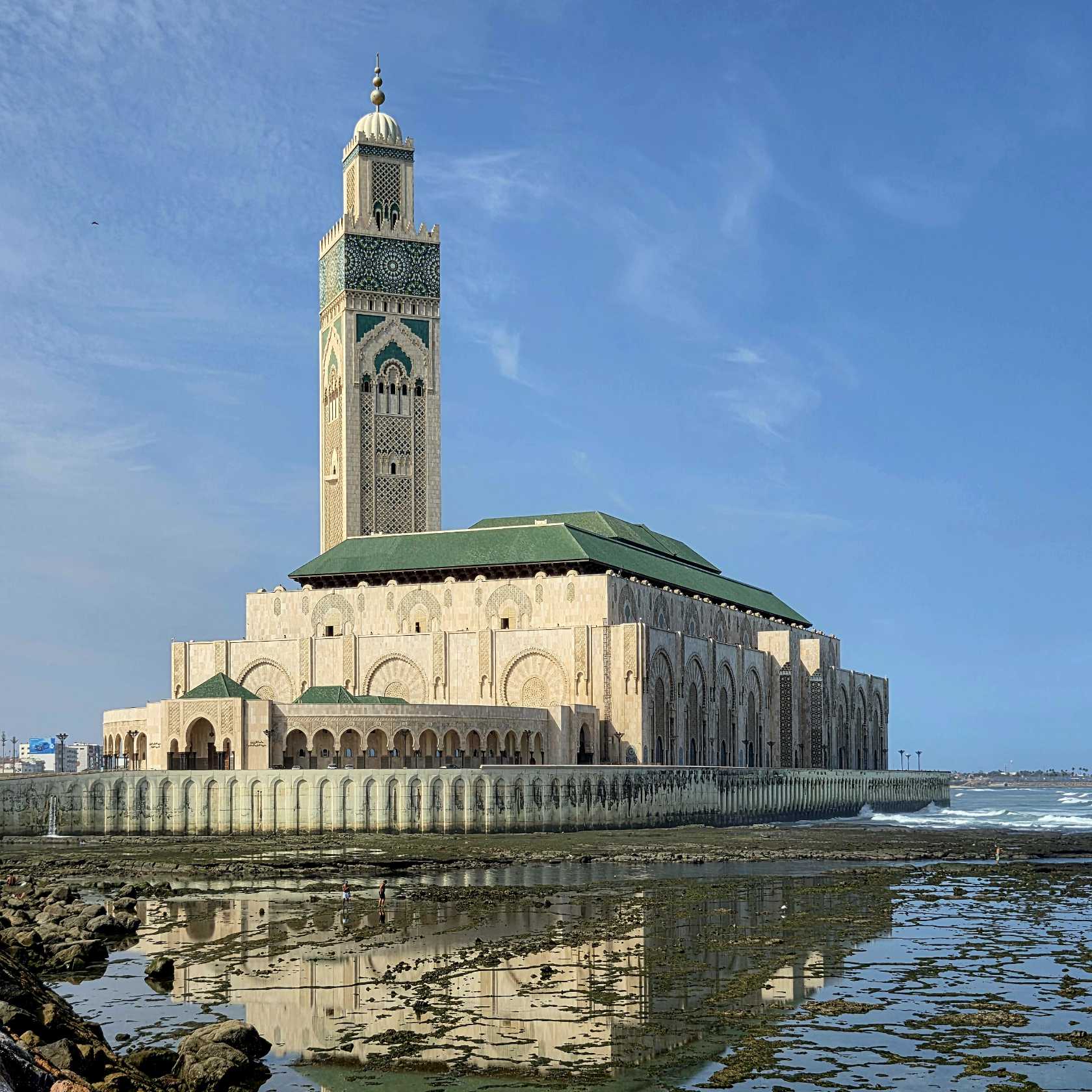
My keynote went well; the congress was a bit chaotic, but the encounters with people were great. Among other things, I learned about giant dinosaur tracks in the Moroccan Sahara that were discovered on Google Maps – but that is a different story.
Odyssee Home
On the way home, I knew about the existence of two ports in and around Tangier and decided to leave early. When I arrived at the ferry company’s desk, the guy at the booth told me that the ferry would be delayed by at least three hours – for an unknown reason. Luckily, I had deliberately built in quite a bit of buffer time before my bus from Algeciras to Málaga, so I hoped everything would work out. After many hours of waiting, the ferry eventually departed. I saw eight Mola mola, numerous playful dolphins, and once again some comb jellies. The sea was calm and the sun was shining. We arrived at the harbour in Algeciras with a three-hour delay, but I still had enough time to catch my bus. However, for obscure reasons, the ferry would not dock for another half hour.
Taxi to Málaga
My worry about missing my bus and then the following trains grew exponentially. Everything moved so slowly. Once the ferry had docked, I put on my heavy backpack and ran toward border control. I got through first, hurried through luggage control, and was then called back to have my backpack scanned. Then I ran as fast as I could with my heavy load to the bus station. I arrived a few minutes late and saw the bus leaving just as I got there ... I was deeply frustrated and considered my options. If I missed my connection in Málaga, I would have had to rebook everything. Consequently, I decided to take a taxi, which cost me more than 200 euros, and was – unfortunately – not covered by the Faculty of Science’s sustainability fund. The rest of the trip was peaceful and went largely according to plan. This was important experience, as I was planning to repeat this journey with a group of students as part of a block course in the fall semester.
Morocco Part Two: Zurich – Meknes (2766 km)
I had planned the block course trip in such manner that I could prepare my students’ individual research projects with them on the train, especially during the high-speed train journeys in France and Spain. I had not taken into account the fact that some people do not like to, or simply cannot, work on their laptops in trains. Oh well. With this fairly large group of 13 people, I contacted SimpleTrain again to book tickets and make reservations. Before our departure, I carefully checked the stacks of printed tickets and hotel reservations.
I met the students at Zurich main station, where some were already on the train because it had come from Winterthur, where several of them live. When I arrived on platform 34, there was an announcement that our train would continue to Geneva as planned because of an accident. Imagine my distress: this was how our journey started, and were already at risk of missing all our connecting trains. Luckily, the students were less worried about the journey than I was. Two of them had forgotten their Interrail passes and had to buy new ones themselves.
Coming up with a plan B
I got in touch with SimpleTrain to come up with a plan B in case we failed to catch the TGV in Lyon. Their reply stressed me even more because we would have had only one option left: Flixbus. Long story short: The Schienenersatzverkehr (replacement buses) worked out fine, we caught a reasonable connection to Geneva, and once we arrived there, we were (literally) back on track. As a result, I was able to return to my beloved little restaurant in Lyon and then had plenty of time to explain the research projects to the students on the train to Barcelona.
The next day, I had planned to spend the afternoon in Córdoba because I had always wanted to see the Mezquita. In spite of the fact that it was the end of November, there were still a lot of tourists, though probably fewer than at other times of the year. In any case, it is a remarkable place, and it provided a welcome break from our long train journey.
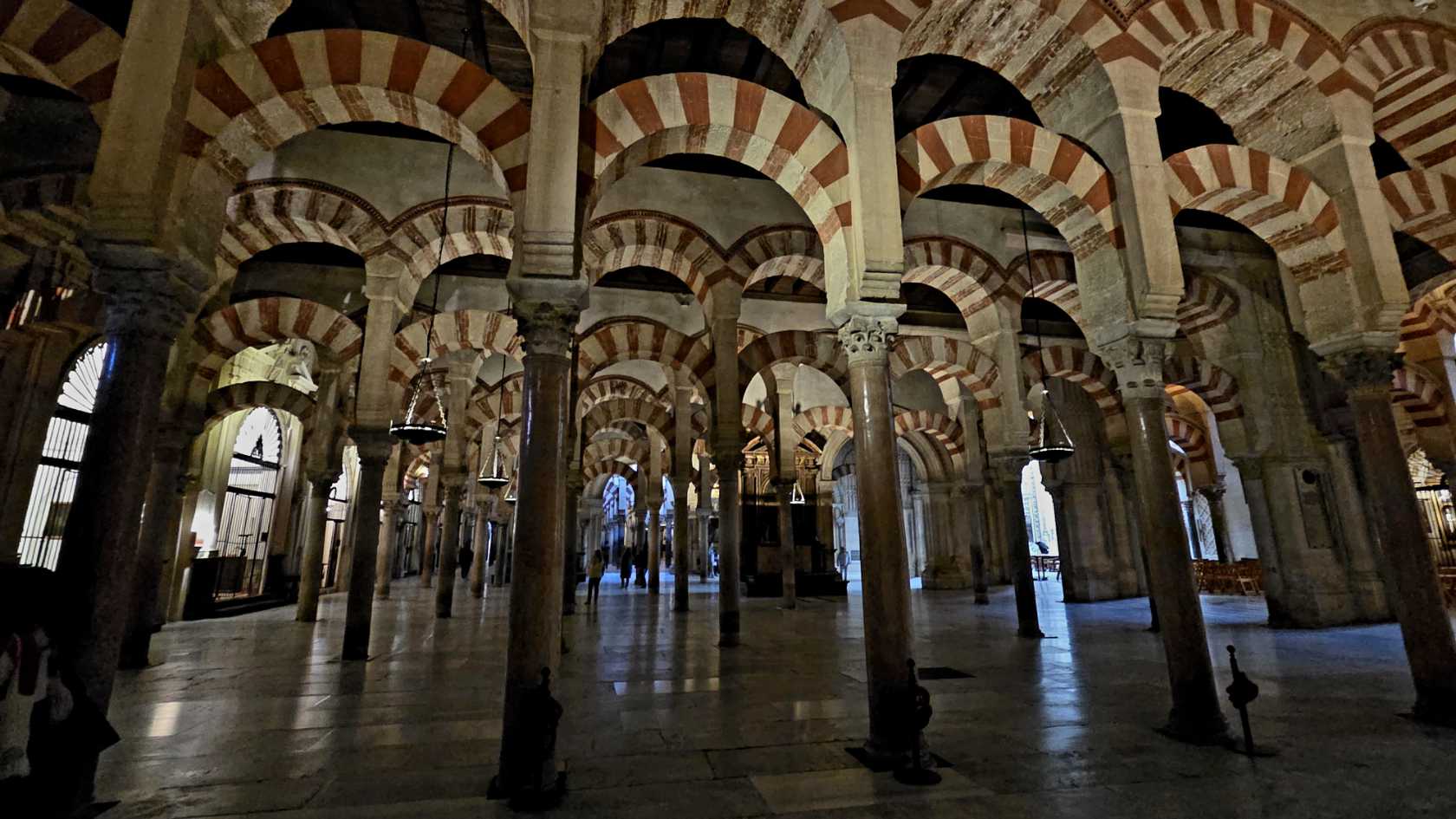
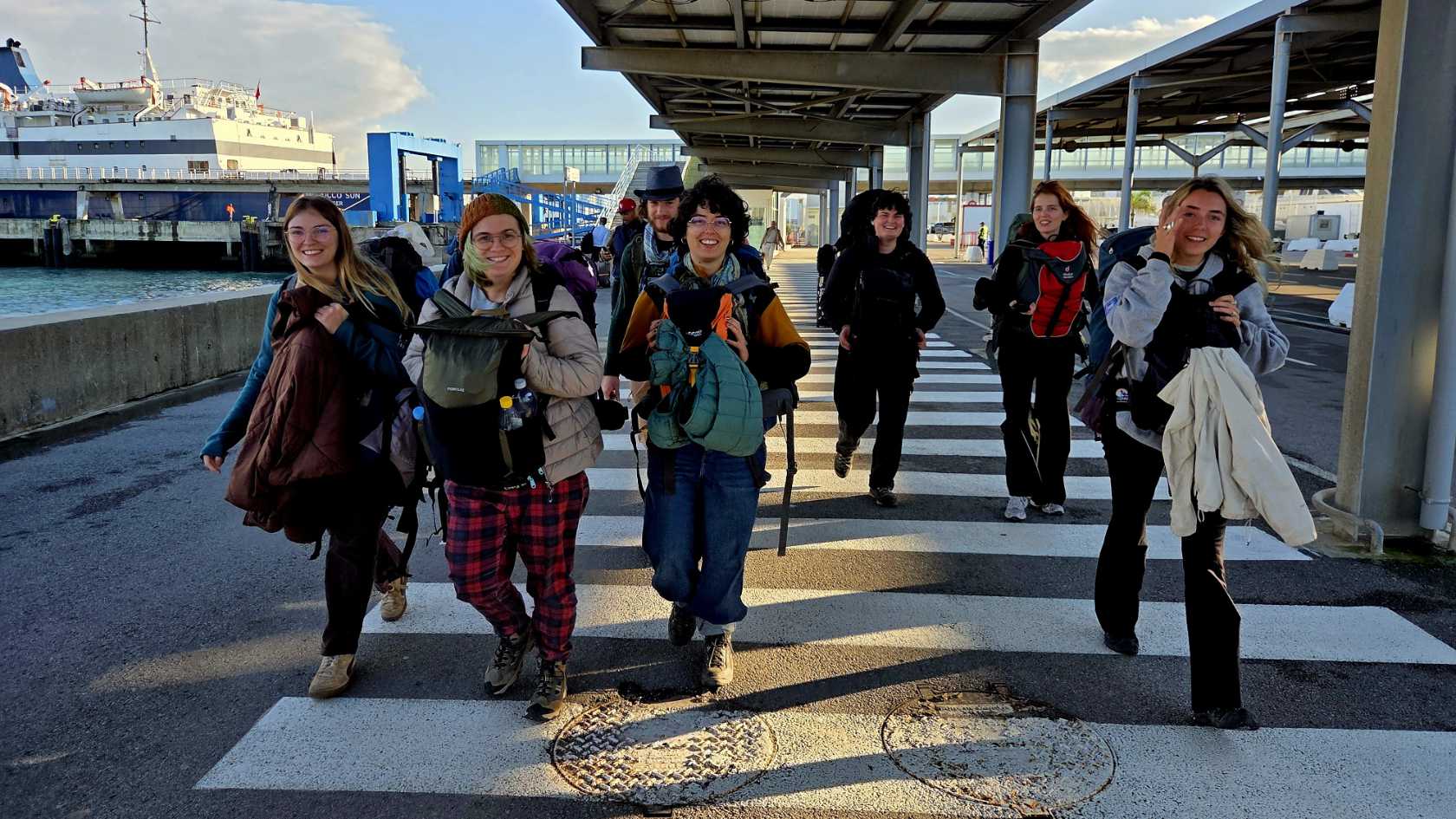
Catching the train to Cádiz was a bit stressful, but we all made it. We arrived in Cádiz quite late and very tired. The following morning, we took the first bus to Tarifa. Remarkably, the ferry arrived on time and even in Tangier everything worked out as planned. We then took the fast train to Kenitra, where we had to change trains for Meknes.
What I did not know was that the trains are packed on Friday afternoons. Even though we had reserved seats, getting everyone aboard with our big backpacks and suitcases was a struggle. At this point, the students started hating me and my environmentalist idea. Some were so stressed that I could not cheer them up. It was then that three of them decided to fly back to Switzerland after the field trip, even though they would have to pay for the flight themselves.
We arrived safely, but tired, in Meknes, where our lovely Moroccan drivers were waiting for us. Overall, the field trip went well. I think it is fair to say that all participants will remember this adventurous trip positively, despite the hardship along the way. The trip back home to Switzerland was pleasantly uneventful.
Morocco Part Three: Tapas and the Wild Ocean
In January and February, I traveled to Morocco again by train to attend the International Symposium on Early and Lower Vertebrates, which was organized by Abdelouahed Lagnaoui from Berrechid and me.
Zurich – Marrakech via Cádiz (3053 km)
This time, it was, well, difficult to say the least. The trains were not running as planned because of the terrible accident near Córdoba, so I arrived in Cádiz at midnight instead of 4 p.m., as I had planned. In the end, this didn’t matter, because due to three storms over the Atlantic, all ferries crossing the Strait of Gibraltar had been cancelled. I was disappointed because this meant that I would miss the first day of the pre-conference field trip, but there was no way to speed things up.
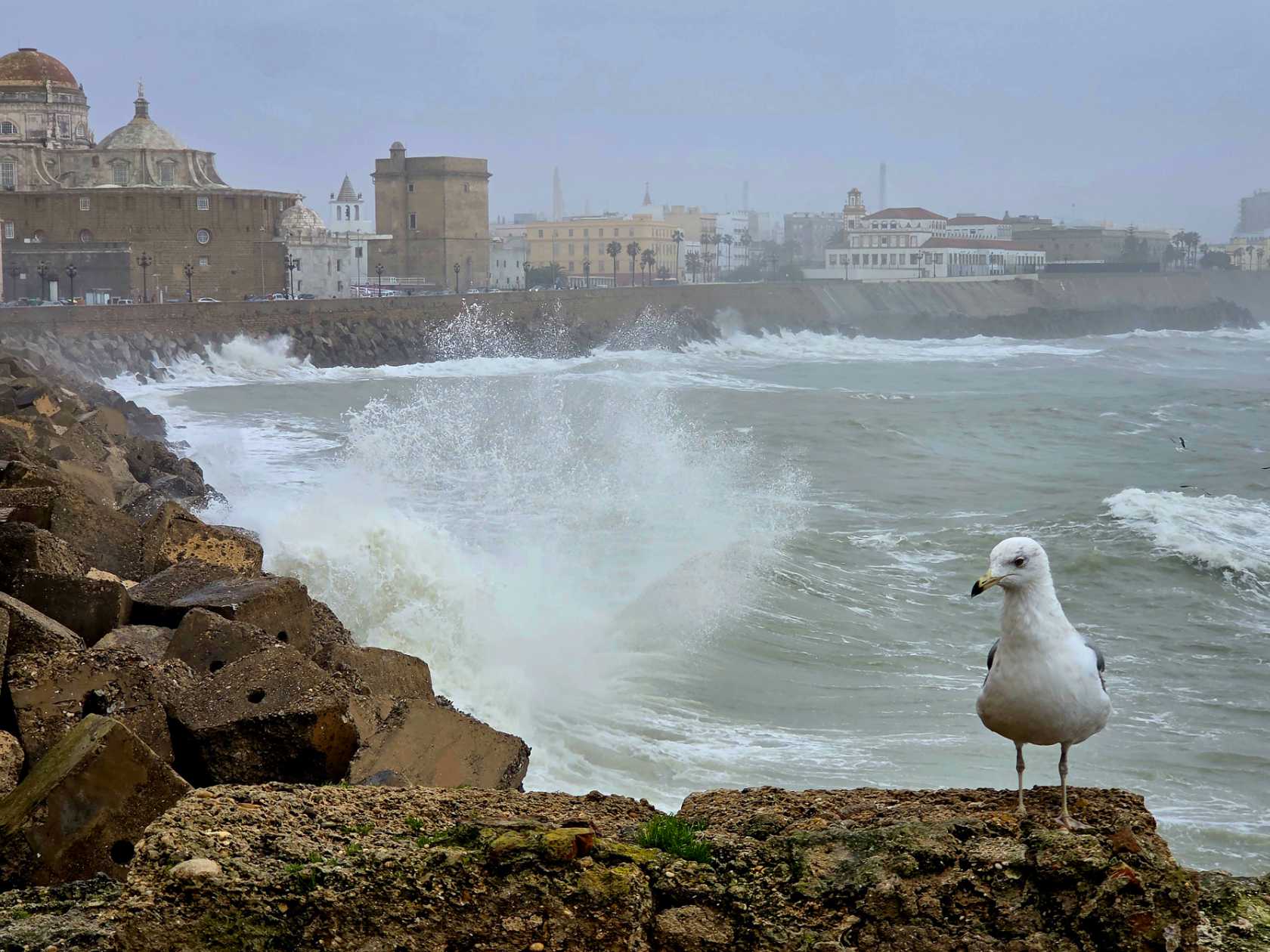
So I spent a day in Cádiz, enjoyed the views of the wild ocean, did some sightseeing, had some excellent tapas, and relaxed.
The following day, I traveled to Algeciras because all ferries from Tarifa had been cancelled again. Despite the misinformation provided by an impressively unmotivated lady at the ferry company’s ticket booth, I made it onto a boat around midday. I arrived at Tanger Ville around 4 p.m., took the Al Boraq to Casablanca again and then the train to Marrakesh. There, I was picked up by a driver who took me into the Atlas Mountains, where I finally joined the field trip – at 2 a.m., with a delay of 32 hours. The field trips and the conference were nice but extremely demanding for me as the main organizer.
Surrender: Marrakech – Málaga (743 km)
I did not have much battery left when I bid my colleagues farewell and headed back to Switzerland by train. I arrived in Tangier as planned.
Luckily, the weather was calm the next day, but again, the ferry to Tarifa was super late. After a three-hour wait, we finally departed. In Algeciras, I went to the train station, but there were no trains. I took the next bus to Málaga, hoping that there would be trains to Madrid, but the only thing I got were gloomy looks from the Renfe employees at the ticket counter. No trains for at least another day or two. They recommended looking for a bus instead.
At the bus station, there was a sign at the ticket counter saying “We have no more tickets to Madrid. Check online!” So I checked, but there were no seats available for the next day either. I was deeply frustrated and tired, with no motivation to wait in Málaga for who knew how many more days.
And so, after about a year and a half, I gave up my streak of not flying and grudgingly booked a flight to Basel. That did not go smoothly either, but that’s a story for another time.
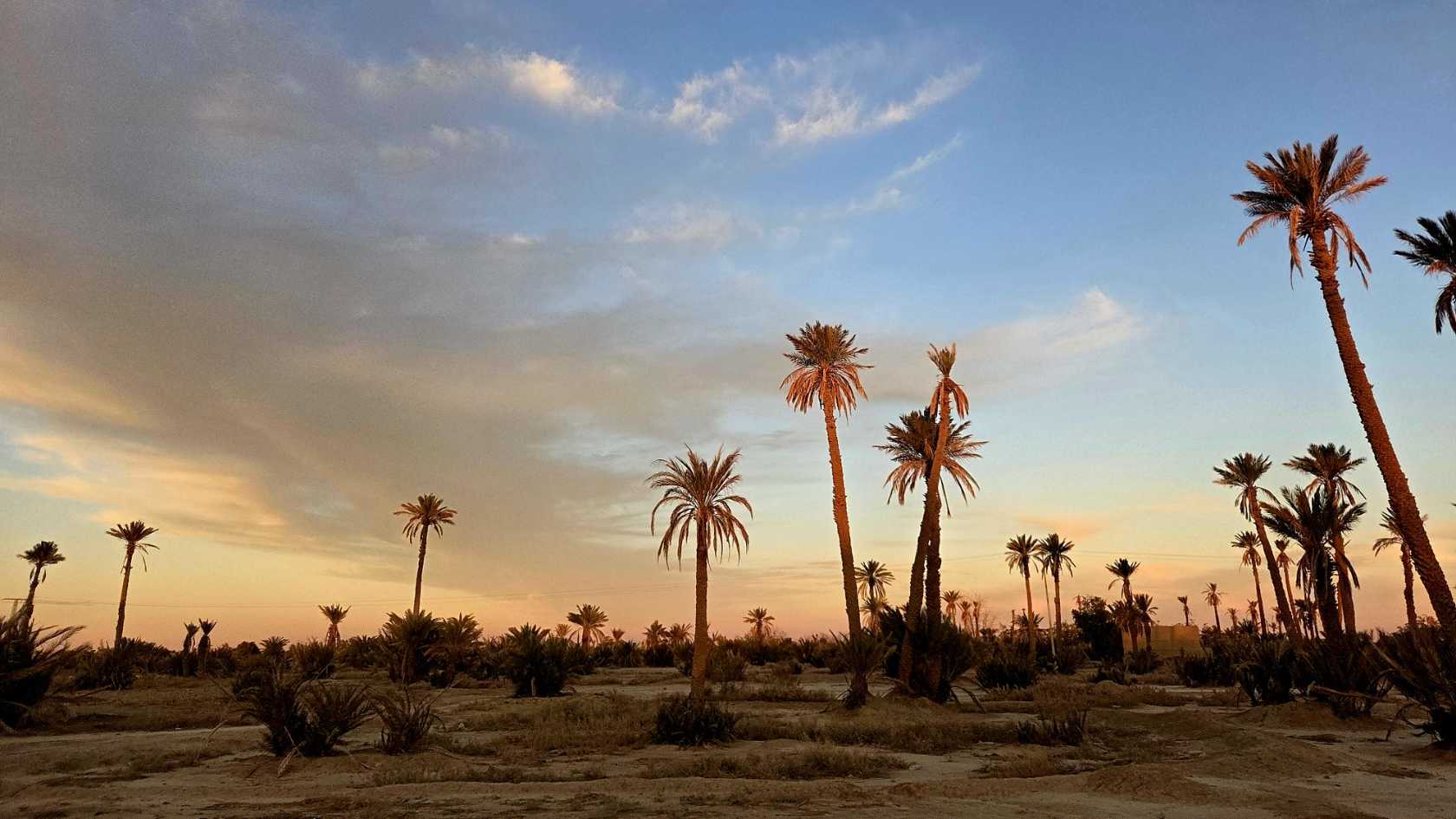
Learnings
Coming back to the title of this story: at the end of 2025, I made a list of all my trips and estimated the distances traveled based on Google Maps. The total came to about 40,000 kilometers – close to the length of the equator. Those of you who have continued reading this far might be thinking: “Surely, he will stop traveling such long distances by train!” Actually, no. Climate change remains one of the greatest challenges facing humanity, and I still enjoy train rides. For those of you who would like to do the same, I have a few recommendations:
- Plan generously.
- Build in breaks at beautiful places to relax
- Consider Interrail passes, which can be a very clever solution for trips like these
- Expect delays
- Enjoy the journey and the adventures it brings!