Buried Underwear Shows Land Use Is Key to Soil Health
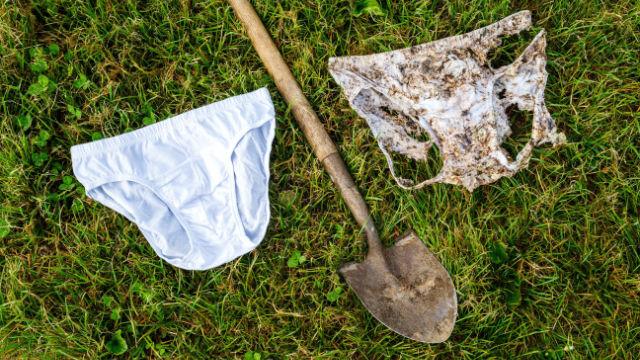
A citizen science project involving 1,000 volunteers and more than 2,000 pairs of buried cotton underwear shows that land use is the most important factor in determining decomposition rates and soil life.
Amazon’s Biocultural Heritage Under Greater Threat Than Expected
Indigenous cultures in the Amazon region will lose up to one-third of the native plant species due to climate change while biocultural knowledge is set to decline sharply by 2080.
Environmental DNA Reveals Impact of Climate and Humans on Global River Fish Biodiversity
Human activity and climate influence biodiversity patterns in river ecosystems, as a global analysis of fish biodiversity using environmental DNA (eDNA) reveals.
The HiBiDiS mission aims to provide new insights into forest biodiversity, answering key questions about climate change. UZH is participating as a scientific partner.
An analysis of bacteria in Lake Zurich reveals that some soil microbes acquire new traits in order to colonize new aquatic habitats, while others reduce their genome size.
Sustainability is no longer just nice-to-have, it’s a concrete call to action. The UZH Sustainable event showcased how the University of Zurich is answering this call.
The subtropics are particularly affected. Explore animated diagrams and interactive maps that show the extent of the decline in various climate scenarios.
Pesticides Significantly Affect Soil Life and Biodiversity
Seventy percent of soils in Europe are contaminated with pesticides. A Europe-wide study now shows that their effects on soil life are substantial, as pesticides suppress various beneficial soil organisms.